A Pocket Guide to Pride Flags: An Illustrated History of Queer Community Symbols
Beyond the rainbow.
Find your own flavor of pride with this definitive guide to pride flags of all stripes—their history, meanings, legacies, and cultural significance around the world. A whole spectrum of stories has unfolded since the original rainbow flag debuted in the 1970s. For the first time, here are over 30 pride flags collected together, accompanied by details about their symbolism, creators, usage, and sometimes controversial histories. It’s all presented with graphic flair by Icelandic designer and comedian Sindri “Sparkle” Freyr.
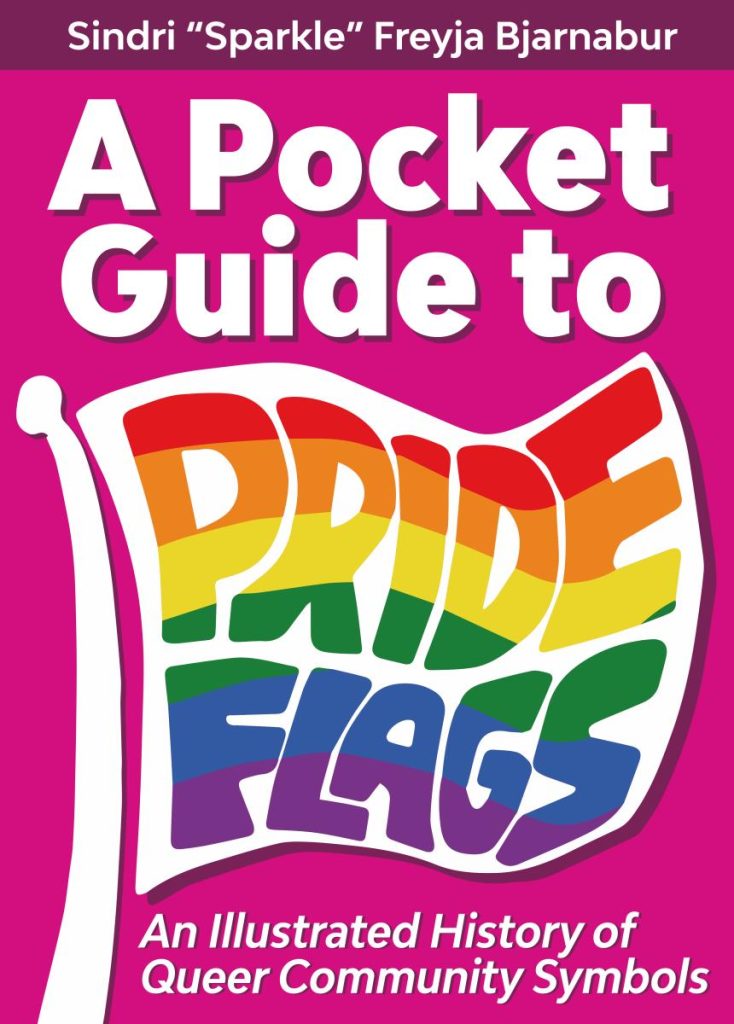
If you’re LGBTQ, you’re likely familiar with your community flags, but you’re not the only ones! Kinksters, bears, sex workers, and drag performers—there’s a flag for you. If you’re nonbinary, intersex, agender, genderqueer, disabled, polyamorous, two-spirt, ace-aro, or demi—you’ve got a flag, too. These flags and the motives behind them show us that there really is room for everyone. With both queer visibility and heteronormative hatred on the rise around the world, this bold, stylish celebration of vexillology (the study of flags!) shows how these symbols can help us share who we are, how we define ourselves, and where we find community.
Keep reading to learn more about pride flag history in this first-of-its-kind guide, shipping now from our site or available June 2 at your local Microcosm dealer.
I was scrolling through an old microblogging website when I discovered pansexuality. Past bad memes, past discourse, past gifs of Benedict Cumberbatch, until my eye stopped on a flag. It had three colors: magenta, yellow, and cyan, and it was beautiful. There is a very real chance that without that flag, I would not have found the words to describe myself.
It took me a while to figure myself out. I was in no hurry to date anyone, so taking on a label seemed a bit silly. When I was about 15, I finally asked myself a question: “Do I like women?” The answer was yes. So I asked myself, “Do I like men?” The answer was again, yes. So, eyeing a label, I asked one final question. Do I like men AND women? The answer, confusingly, was no. Something about the label “bisexual” just didn’t fit.
It wasn’t until a few years later that I realized I was pansexual, which meant gender had no bearing on my attraction to people. Basically, I can put my hand into anyone’s pants and be happy with what I find.
Years later, I was studying graphic design and decided to write my final essay on pride flags. When I started researching I discovered, to my surprise, that no one had written anything serious about them. Any information about specific flags is spreadout through bad wikis and personal blogs. I decided then and there that I had to be the person to scour the World Wide Web, hunt down original sources, and bring them together into one book.
That, dear reader, is what you are holding now.
I should start out by letting you know that this book was written from the comfort of Reykjavík, Iceland, one of the most queer friendly places in the world. It is a city covered in rainbows. In fact, one of the most visited landmarks is the rainbow road in the heart of Reykjavík. I mention this not to rub it in your face, but to let you know about the relative privilege this book has been written in. Of course, I’m still trans, non-binary, neurodivergent, and so forth, but I have not had the same struggle a lot of other queer people, especially those older than me, have had to go through.
While I’m assuming you picked this book up because you are also interested in pride flags, it does sometimes feel frivolous to focus this much time on them. Many leaders and hate groups have chosen us as a cause for all the world’s ills and are now trying to strip us of our rights. In the face of that, some colorful pieces of fabric seem trivial.
While we have been mostly free of threats to our rights, and the worst of the violence, the hate has still reached the shores of Iceland. Hate groups have shown up at events, newspapers run propaganda, and, for the first time in recent memory, a political party is actively trying to use queer people as a scapegoat. Before the hate got this bad, there was however, a canary in the coal mine letting us know what was to come.
Before violent hate crimes started rising, the most visible form of queerphobia was the attacks on pride flags. They were cut down, burned, and even the rainbow road was vandalized.
I don’t want to overstate their power, but in a country where the majority of people agree that “queer people are good,” pride flags act to divert the violence away from the people and onto their symbols. Seeing a pride flag in a public space says that we, and those who stand with us, are here and willing to fight. Pride flags are our shields, our joy, and a radical celebration of our identity.
Read more of this colorful, radical history of pride flags of all stripes! Order your copy, shipping now direct from our site, or available wherever Microcosm books are sold on June 2.