Queer Horror: Fun and Freaky Perspectives on Macabre Media
Fabulous vampires of screen and page
Don’t be scared straight! Curl up on the couch with Joe and Gina for a romp through their favorite horror movies, TV shows, and books from the 1930s to today, exploring their messages, meaning, and enduring appeal for queer audiences. From The Thing to vampire porn, The Exorcist to paranormal television, Goblin Market to Dr. Jekyll and Mr. Hyde, these thoughtful, conversational essays will make you think, laugh, shiver, and see your favorite media in a new light (even if you have to cover your eyes for the scary parts).
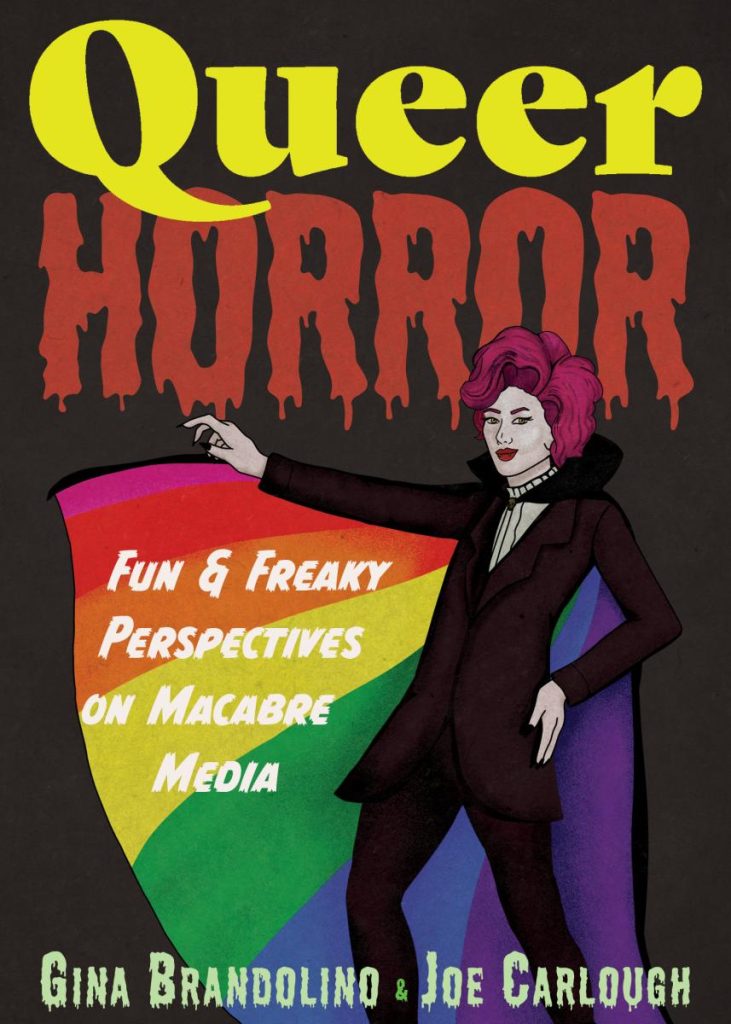
Horror buffs and queer media mavens alike will enjoy this wide ranging journey through a genre often derided, dismissed, and misunderstood, but which offers rich opportunities to explore our culture’s ideas about gender, sexuality, and desire. Whether you relate to the monster or the final girl, enjoy sleuthing hidden queer themes, or just want recommendations for obscure, low-budget ghost movies, this book’ll be a scream.
Read on for an excerpt from Queer Horror: Fun and Freaky Perspectives on Macabre Media written by Gina Brandolino and Joe Carlough, available to order from our site or your local bookseller (shipping from us now, available everywhere 9/2/25).
When we started our zine series, Gina and Joe Talk About, we didn’t intend to create a series that focused solely on queer horror. The first issue was about Queer Horror, sure, written so we would have our first zine ready in time for Pride 2021. That zine will always hold a special place in our hearts: it was our first project together, and we used it to delve deeper into our motivations for loving horror and what it has meant to us and our identities, a theme that runs through the entirety of this book! We followed that issue with issues on Halloween Horror, Wintry Horrors, Queer Horror II, and in 2023, in honor of the classic movie’s fiftieth anniversary, The Exorcist. We weren’t planning to make most of our critical essays on horror intentionally about queerness if that wasn’t important to our theses.
But we are queer people, which will forever influence how we see and digest horror. And while a lot of these essays deal explicitly with queerness and our own journeys, some come from a place of our own love of horror, and how we watch horror films and read horror stories. Gina’s an out lesbian who met her spouse Ellen twenty-five years ago when they were both in graduate school. Joe’s a more-recently out bisexual who finally learned to embrace his queer experiences—and himself. We set out to write essays about the genre of horror as queer people. These identities will forever influence how we take in any media, and it turns out horror has a lot to say about the queer experience, and we have a lot to add to that discussion ourselves, whether we’re connecting a particular genre to our queer identities, relating personal anecdotes to our favorite movies, or digging into what we love about the horror genre outside of what it is to be a queer horror fan.
As we were soon to find out, it can be hard to write any essay and not have our identities influence our take on the genre. Any discussion of nature vs. nurture, whether we are who we are because of some intrinsic us-ness vs. the environment we were raised in, usually ends with the same sentiment: it’s both, dummy. In Joe’s essay “They’re Coming For You, Barbra,” he draws parallels between discovering and then accepting his queerness through his love of horror (and a little talk therapy). It’s an essay about external stimuli—horror movies, everyday interactions, childhood relationships—and how they directly brought him down the path to exploring his own identity as it relates to sexuality, gender, and presentation. But none of that made him gay: instead, it fostered a little whisper that continued to grow louder. Once he understood how to listen, that is.
Gina’s essay “Summer of Dread” delicately threads the needle of life experience. In it, she describes moving as a child from her hometown of Joliet, Illinois, where her house was “not three miles away from Stateville Prison,” to a more rural area, the kind of place her partner Ellen would later say she feels safe due to the lack of bad guys, but a place where both child and adult Gina feel “a pronounced lack of people to help if you get in a jam.” Being far from the comfort of a nearby neighbor or an easy explanation for the noise outside the window was a source of constant unease for young Gina. The anxiety she felt as a little girl, the dread, the feeling of should we even be outside of the house right now? are the feelings any horror fan—and, sadly, queer person—can relate to. At least in a city you can usually find your people, your found family, but it can be hard to do so when there aren’t that many people to start with!
We’re not trying to say everyone who felt anxiety as a child is gay—let’s face it, if that were the case, we’d all be super gay. What we’re saying is that the experiences we all have in childhood help to shape us. Every feeling of fear, every time we feel unsafe, is a lesson learned. And as queer people, we learn a lot of lessons that heteronormative people might never have to even consider.
At the end of the day, horror is what has brought us together, in this book. We wouldn’t have even met if not for our joint love of horror: Gina wrote to Joe after reading a series of Victorian and early 1900s horror stories he’d re-published as zines, and it was shortly after that the idea of our zine series was born. Put any two horror fans in the same room and they’ll have much to discuss, regardless of what they love about the genre: one may love big budget horror while the other loves homemade scary movies; one may love slashers while the other loves ghost stories; heck, one might fastidiously curate a list of the over five hundred horror movies they’ve recently seen on their computer (::cough, JOE, cough::) and the other might be constantly reading, listening to, and watching horror to find new material for the courses she teaches on horror (aka Gina’s roving syllabus eye). Those two people will still most likely have an animated conversation about horror and, more importantly, how they feel when they watch a scary movie. It brought Gina and Joe together, and look, it’s working again, because here we are, in conversation with you as you read our book.
In our experience as avid horror fans, there’s no shortage of conversation to be had around horror and how it makes us feel. Some of the essays included see us discussing our gender and sexuality, like when Joe explores using movie characters to try on different identities in his essay “Genderplay at the World’s Fair”; some show us sounding the depths of our own fear, like Gina talks about in her essay “Lost Girls”; and some see us just being scared, or enjoying a particular piece of media and sharing our joy—queer or otherwise!
One of the aspects of the horror genre that is always surprising to us is the grand range of responses any number of people can have to the same movie. In the scheme of personal critique, the essays included in this book are our responses to some movies, books, and poems you may have seen and, hopefully, a few you haven’t. It’s our recommendation that you experience the stories we discuss on your own before reading the essays about them if you don’t have a comfortable recollection of them or don’t want spoilers. We want this book to be a conversation between a few horror fans, whether you’re keeping that database like Joe or dreaming of lesson plans for your students like Gina, or anywhere in between.
With Love & Horror, Gina & Joe
Now that you’re in the mood for more queer and quirky takes on the horror genre, you can order Queer Horror: Fun and Freaky Perspectives on Macabre Media by Gina Brandolino and Joe Carlough from our site or your local bookseller. Get a little scared, as a treat!