Indigenous Punk: A Definitive Guide to the Native, Aboriginal, and Pacific Islander Metal and Rock ‘n’ Roll Musicians Who Changed Music
Adapt the dominant culture on your own terms
Native artists have always been central to hard, heavy music: surf rock, hard rock, heavy funk, straight edge, thrash, rap metal, grunge, grind core, and especially black metal. Natives have made their own uniquely Indigenous hard music forms, prehispanic metal in Latin America, Navajo rez metal, and experimental ambient metal in the far north.
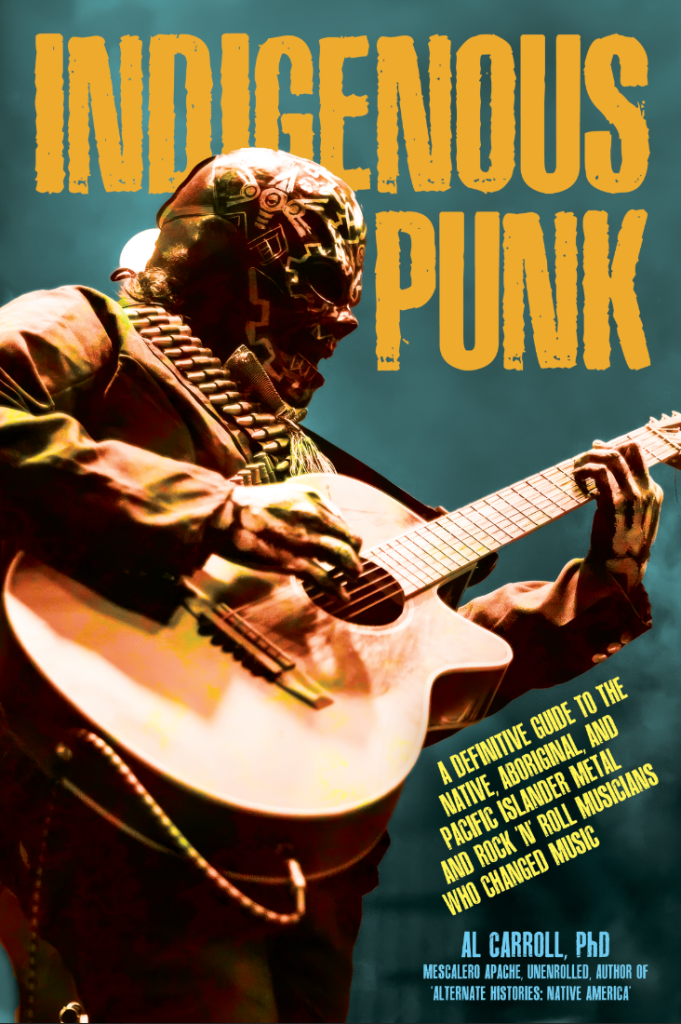
Beginning with Link Wray’s trailblazing guitar sound that gave birth to punk and metal as we know them today and culminating in contemporary acts like the all-female, Māori doom metal and punk band Death and Hatred to Mankind, this eye-opening, encyclopedic history of Native bands and musicians spans the last 60 years. Historian and professor Al Carroll teaches us to listen critically to spot imposters and bigotry, while celebrating the explosion of Indigenous bands during the rise of thrash and later nu-metal, how Native artists in the so-called U.S. gained popularity and radio play overseas while their releases were censored in the States, and the “harder than you” grit of bands originating on Pacific islands.
There’s something in this book for every hard music fan. Pick it up if you’re looking for a new way to see the music and culture around you or inspiration to create something of meaning to your own community and roots. Get ready to learn about your new favorite band, deepen your understanding of the music you love, and think critically about the dominant culture.
Want to find your new favorite band? Read on for an excerpt of Dr. Al Carroll‘s Indigenous Punk, or preorder your own copy from our site, shipping after April 16th.
Introduction
You might not know it, but Indigenous punk, metal, and hard rock changed the musical landscape and the world. Most Americans (and most others) know nothing about Native and indigenous music except the lying, offensive caricatures from old Westerns. But tribal nations have important and influential musicians and singers in every genre you can name. Mildred Bailey was a legendary Coeur D’alene jazz singer. Jesse Ed Davis was an influential Kiowa blues guitarist, playing in Taj Majal’s, Eric Clapton’s, and Jackson Browne’s bands. Louis Ballard was an influential Quapaw classical composer. OMC was a Māori rapper, among the most successful in the world.
But this book is solely about Indigenous punk, metal, and hard rock from the past 60 years worldwide. It’s also about how this music’s artists have written about, sung and performed on Indigenous issues, inspired by and feeling affinity for Indigenous people, playing Indian with long hair and Mohawks, and expressing what they believe to be traditional Indigenous beliefs. Finally, it’s about the Native origins of this music. Native artists were and are central to hard, heavy music, from surf to hard rock to heavy funk to straight edge to thrash to rap metal to grunge to grind core and especially black metal. Natives have made their own uniquely Indigenous hard music forms—prehispanic metal in Latin America, Navajo rez metal, and experimental and ambient metal in the far north.
Why did I write this book? I grew up near San Antonio, the son of an Apache and Mexican mother. Natives and Latinos have huge numbers of metal and punk fans. San Antonio’s metal and punk venues are filled with dark-skinned Native and Native-descent (mostly) males. I was a fan before I was in middle school and still am, even as I near retirement age. The music is a source of strength, articulation, and community. I even use it to teach as a college professor. But not enough outsiders know about it,
and Natives in it.
Who Is Included In This Book?
Who is Native and who is not? Both blood and culture count. Just saying you are is not enough. Keeping this nonacademic and non-bureaucratic, to be a Native or Indigenous you must have ancestry and be seen and accepted as Native by other Natives.
You also must have the lived experience of a Native. You know what it’s like to be stopped by cops for DWI, Driving While Indian, the Native counterpart to Driving While Black. You have something else similar to the experience of Black people, being called a “prairie n—-r.” You know what it’s like for little kids to make the “woo-woo” sound when they see you. Gullible types think you get free money. Many people are surprised to see you, thinking Native people don’t even exist anymore. But you also are part of a Native community, have ties going back generations, and other Natives know you are Native by their own “Indian radar,” not too different from LGBTQ+ people and “gaydar.”
Going by any of that, Elvis was not Native. He had very distant Native descent, but he also had distant Jewish ancestry. He didn’t know anything about either bloodline, other than vague stories, and he didn’t have the ties or the lived experience. Neither did Chuck Berry. Like many Black people, he heard the family stories of Native descent intended to hide white ancestry from enslavers raping their slaves. Sorry to tell some of you, but most of the vague claims of being “part-Indian” from both white and Black people are false.
In the United States and Canada, if you have Native blood, you are born Native and die Native, and so it is for your children. In Latin America, it gets really complicated. In Spanish-speaking countries there (plus Brazil), dinero blanquea, “money whitens.” But most people there have some Native ancestry. In half a dozen countries, most people are entirely of Native ancestry.
In nations like Mexico, a mixed blood is a mestizo, “not Native.” In nations like Venezuela, being both Native and Black makes you pardo. Often you are considered Indio (which is an insulting word), but only if you live in an Indian village. Leave the village and you are considered mestizo. Get education or money, and you are no longer Indian because to be Indian is to be poor and uneducated, like a hick or hillbilly.
Even though white people in Latin America make up less than a tenth of the population, since conquest, they have most of the money, land, and influence. They have spent centuries convincing Natives that Native blood and cultures are shameful and something to overcome. Australian Aboriginal nations are Indigenous people and so Aboriginal punk and metal are also part of this book. So are Māori bands. Pacific Islanders, Hawaiians, Samoans, and others make up the other Indigenous people in America, and so their punk and metal music are also included here.
Which Bands and Performers Are Included?
Any punk, metal, and hard, heavy bands who put out music or performed publicly for more than briefly. This likely means some older bands are left out.
There were less well-known Native hard rock and metal bands in the 60s and 70s that played live on and near reservations but never even made demos back when it cost over half a year’s wages for a minimum wage worker. Or they did make a record with a small indie label, or had it pressed themselves, but only the most avid record collectors know about them. This is even more likely to be true in Latin America.
Does Any Native Musician in a Band Count a Band as a “Native Band”?
No. They must be central to the band as writers, singers, and the most important, instrumentalists. Randy Castillo, Apache drummer for Ozzy Osbourne, is not included. Nothing against his skills, but no one would say Ozzy’s band was a Native band. But the Jimi Hendrix Experience was certainly a Black band, even though two-thirds of it were white Englishmen. For example, Testament and Uniform Choice are Native bands.
What about Imposters Posing as Native?
That’s only a serious problem in two genres of music. One is country music. Almost all the southern white people that claim Indian ancestry: their families pretended to be Native trying to hide Black ancestors because great-great-grandpa was a rapist enslaver.
The other is in a genre within a genre, Nazi black metal, so-called NSBM. There are white people in Latin America posing as Native to shout lyrics preaching hatred for and inferiority of Natives, or telling lies about Native cultures to spread white supremacy. Nearly all supposed Aztecs and Mayas playing black metal are obvious imposters, posing also in order to play live and not get banned. It doesn’t fool most people. These imposters are listed in the appendix with the evidence proving they are imposters.
Get to know more Native punk and metal artists with Indigenous Punk, available on our site or your favorite Microcosm peddler!