Tagged author resources

Cooking, writing, and bicycling: Interview with author Anna Brones
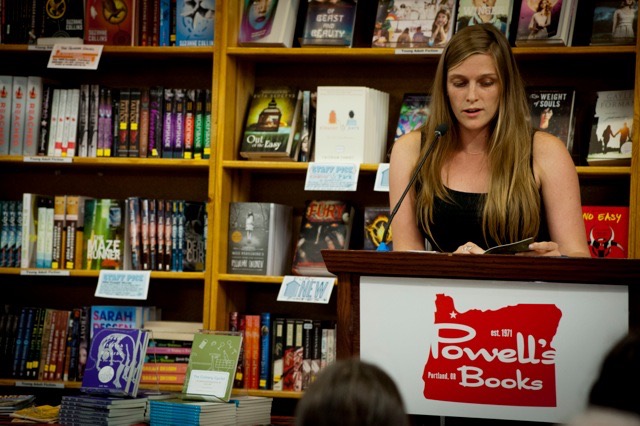
anna brones reading the culinary cyclistAs I’ve been developing our Self-Promotion for Introverts blog series, one person keeps popping into my mind—our author Anna Brones, who I met years ago when I saw her give a presentation about effective social media use, in which she delivered some of the simplest and most useful advice I’ve heard. When I published her first book two years ago, I should have realized that she’d apply her formidable network and friendly powers of promotion to it, and despite not having any kind of outside distribution the book quickly burned through what at the time had seemed like a riskily large print run. I asked Anna to share some of her magic with you all, and she kindly obliged. 

A couple of years ago, you wrote a cookbook for Elly Blue Publishing (which we’re reissuing as a Microcosm title in the fall). Can you tell us a little about the book and what you’ve been up to since?

The Culinary Cyclist is a book about the intersection of a love of bikes and a love of food. What ever does that mean? Basically it’s an ode to the slow life, because if you take the time to ride your bike, and if you take the time to make your own food, then you’re living with intent. And that intent takes time. Since The Culinary Cyclist came out in 2013, Johanna Kindvall and I wrapped up the manuscript for Fika: The Art of the Swedish Coffee Break. Johanna did the illustrations, I wrote the text and we developed all the recipes together. It’s officially out on April 7 and we’re very excited! I’ve also been busy working as a producer on the film Afghan Cycles and keeping up my blog, Foodie Underground. And then there are some other projects in the works, but they’re secret for now!

Before you became a book author, you were already working in marketing and publicity. Was it difficult to transition between promoting other people’s work and promoting your own? Looking back, what do you wish you’d known when you made that transition?

I’ve always liked the networking aspect of marketing. Reaching out to people, putting them in touch with other people and helping people to get the word out. So for that, I really enjoyed doing marketing and publicity for other people’s work. But while I was doing that, there was always this voice at the back of my head that was telling me that I was perfectly capable of doing my own projects and marketing them as well. Honestly it wasn’t that hard to transition to promoting my own work, but there is that part of me that is pretty sensitive to whether or not I am being a shameless self promoter. Then again, a lot of people that get a lot of attention and media are the ones that promote the hell out of themselves. I think we can all find a nice balance, but I do think it’s true that most of us err on the side of too little self marketing and promotion, and we could probably all do with pushing ourselves a little out of our boundaries. 

What strategies have worked best for you in terms of promoting your books, and are there any things that have not worked as well? 

This is going to sound really ridiculous, but when I was thinking about Fika coming out I kept thinking of it as my “baby.” I don’t have children, and I would never dare compare writing a book to having a child, but there is a similar sense of ownership over this thing that you created. It’s something that you’re proud of. It’s something you want to share. I thought of all the baby photos I saw from my friends, and I figured if they could do it so could I. So started taking really silly pictures of “Baby Fika” all over the place. Baby Fika’s first coffee. Baby Fika’s first bike ride. You get the idea. Because it was such a ridiculous endeavor it didn’t feel like marketing, and because I wasn’t just posting a link every day saying “BUY MY BOOK NOW!” I think people responded well to it. However, my friends who are actual parents might hate me, I’m not sure. 
Ultimately I really do believe that when you’re marketing something it has to be a part of a larger story. A link isn’t enough. For starters, your product has to be good. But after that you want it to be a part of a bigger picture. You’re not just selling a book, you’re selling a vision, a lifestyle. That might sound like I’m an aspiring life coach, but there’s a reason that so many brands and individuals nowadays are so focused on “storytelling.” Because stories are what we care most about, and we all have one. So make sure yours is one you believe in and that you can talk about for hours again. People seek authenticity and I think when marketing doesn’t work is when it feels inauthentic. 

You’ve now had experience with publishing a book through a teeny, tiny press (EBP) and a major label house (10 Speed, owned by Random House), and soon to be a still very-small indie (Microcosm). What differences between these experiences have struck you? 

I feel so lucky to have experienced both. They are two very different worlds. Mostly in terms of time; The Culinary Cyclist went from concept to final product in about 8 months. Johanna and I did the Fika proposal in the beginning of 2012. So that’s 3 years between idea and final book. Another big difference, at least in my experience, is the number of eyes on your work, both in the editing process and on the final product. I think having my first book be a smaller print run, made me more comfortable with having my name out there, doing interviews and seeing the book mentioned, because you know that the whole world doesn’t have access to it. There’s a comfort in that, because you have the luxury of your work really being seen by a niche market that is predestined to like the subject which means that it feels more like a small group of friends getting to read it. But now I am ready to go a little bigger, which makes it exciting that Fika is coming out but also that The Culinary Cyclist is getting reprinted with a much larger distribution. 
I also feel very lucky to have worked with two publishers that so wholeheartedly believe in my projects. Obviously my experience is my own—everyone has a very different experience, whether they are working with a small or large publishing house—but I will say that the people at Ten Speed and EBP have been a dream to work with. A large part of that is that they were both so excited about the content that we were doing for them. Which is proof to me of two things: 
1. Work with people who are like-minded and passionate about the same things you are passionate about. 
2. For aspiring authors, pitch to the publishing houses that you WANT to write for, not the ones you COULD write for. 
I think so often we are so focused on getting paid/getting a book deal that we just pitch right and left to places that may not necessarily align with our own values, or be as excited about a topic as us. The golden spot is to find someone that’s on the same page as you.

Anything else you want to share?

One thing that I have really come away with from the last two years of book publishing is a reminder that everything is constantly evolving. Our personalities, our preferences, our attitudes; everything is constantly in flux. We are humans, the only thing constant in our lives is change. But when you write a book, everything is on paper, for the rest of eternity. Or at least as long as your book is out in the world. That can be a bit intimidating. 

In re-reading The Culinary Cyclist while I was doing edits for the reprint, there were a few spots that I laughed at myself, or even cringed. Because even in just two years I have changed a bit, and if I were to rewrite that book now, some things would be different. So it has all been a lesson in approaching the things that I read—books, articles, blogs—in a different way, and not making assumptions about what the writer says or what they stand for. When we create, we put something into the world. But if it’s not perfect—and it never is—we can do better the next time. And the next time. We are always learning. And we have to be flexible, and the same things go when we’re talking about marketing and publicity. Try something, and if it doesn’t work, do something different. No one has the right formula, and if they tell you that they do, they’re probably lying or want your money. 

This is a Microcosm author interview! Our last author interview was with Al Burian, and our next one is with Ben Snakepit.
Self-Promotion for Authors: Getting Psyched for Self-Promotion

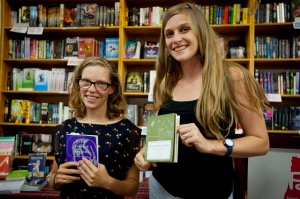
microcosm authors at a book readingHello again! This is a series for Microcosm authors (and other curious bystanders) about book marketing and publicity. The first post in the series was a rapid-fire outline of our job as the publisher of the book. There’s a lot of misinformation out there about what publishers do and don’t do (and a lot of variation in the reality, too), so hopefully this is helpful. 
This next post gets started on the author’s role by focusing on a pretty common anxiety among authors: Self-promotion.

Many of our authors have no problem at all with promoting their work, and some have come to us with years of building up a successful body of work or a personal brand and are ready to grab a megaphone to tell the world about the book they haven’t even written yet. Many others experience discomfort akin to panic at the idea of standing up and talking to a room full of people about their book, using social media to broadcast sales pitches and positive reviews, or even telling friends and family that they wrote a book and that there’s an opportunity to buy it.

First of all, self-promotion anxiety is so normal as to be, well, the norm. That said, you’ve gone through all this work to produce a book. The more comfortable you are with talking about it with friends and strangers alike, online or off, the more people who want or need to read it will be able to. And we’re here to help you do that.  

Here are some common concerns and what I’ve learned over the years, as a nervous author myself and working with many others, about how to tackle them:


I don’t want to spam/annoy/ask people to buy my book

Ok, good point. But there is a huge difference between actual spam (eg, twice-daily unsolicited marketing emails in bold, red, italic letters saying BUY NOW) and book promotion. Here’s another way to think about it: You just wrote a book about topics that you care deeply about. Other people who care deeply about the same things (or about you) are going to be excited to find out about, buy, and read your book. Your promotional role is to find them and offer them the opportunity to do this as easily as possible.

Practical tip: Think about what makes your book exciting and interesting. How did you get the idea for the book? When did it really come together? What have other people or your editor said that they like about your book? Write all of those things down and refer to them when you’re trying to find something to say about your book other beyond “it exists! buy it!”


Most people won’t want to read my book

That’s true. But you didn’t write this book to please everyone in the entire world (that would be the most boring book ever). You wrote it for your readers. That’s a very particular set of people and most of the job of promoting is finding them and talking to them (often about topics other than your book). Here’s yet another way to think about it: You’re part of a movement. Whatever your book is about—teaching in inner-city schools, making soap, cats, vegan cooking—it’s now become a building block in that bigger movement, and you’ve become a leader of that piece of the movement (and maybe a much bigger piece than just the one covered by your book). So your job is less to find random people and tell them you have a book, and more to connect with your movement about your book and the ideas in and around it. 

Practical tip: Starting a blog or forum where you write about many related topics (but keep a purchase link to your book in the sidebar) is one way to do this. Social media is another. For many authors it makes sense to bring readers into the conversation as much as possible. For others it works to share parts of their personal experience with the book. For yet others, the best strategy is to speak at conferences, write guest blog posts, and otherwise tap into existing platforms. Your style is up to you!


If my book is good, then I shouldn’t need to promote it.

Sadly, sadly, sadly, this is not the case. If it were, all our jobs would be much easier. Thousands of books are being published every day, readers have more choices than they can even understand, and much as we have developed your book uniquely with its title, cover, marketing, and publicity plan, it is still necessary to go out there and tell the world why it’s worth taking a look at. 

Practical tip: Practice describing your book in one sentence. We call this the Five Second Pitch. Find a friend, family member, or coworker who knows very little about your book and try the pitch out on them. How do they respond? Adjust as necessary. Once you’ve mastered this, think about other things that people engaged by this will want to know. Prepare a 30-second speech with more details about the uniqueness of your book and, if relevant, how it fits into existing news stories and trends.


Help, the critics are going to eat me alive!

Yeah, reviews are scary. It’s a mixed bag out there. Many famous and well-regarded authors have a policy of never reading reviews and we think this is a great idea. The psychology of it is unfortunate—your ten good reviews might leave you cold, while the one lukewarm one could have you grinding your teeth for years. We keep track of reviews for all of our books so that we can tell the world about the good ones and issue corrections for the factually inaccurate ones. So there’s no reason that you need to read your reviews or set up a google alert for your book unless you want to. Reviews don’t affect sales as much as everyone wants to believe (though bad reviews are better for sales than no reviews at all), so our advice is not to worry about them as much as possible. Easier said than done, we know! 

Practical tip: Instead of googling yourself, google other authors whose books have sold well yet gotten mixed or terrible reviews. They often have very funny (and helpful) things to say about the experience. 


Imposter syndrome (eg, feeling like you aren’t an expert or have no right to speak out about the topics in your book) 

First of all, let me reassure you: You did a great job. Your book is awesome. Only you could have written it, and you are perfectly qualified to speak about it, and the subject matter in it, on par with anyone else on the planet. We’re selective about what books we publish, and we don’t let them go to print until and unless they are good (and unique) inside and out, with strong, well-put-together contents that are compelling to a group of readers. No exceptions. 

Secondly, a lot of people feel this way. Trust me, many very accomplished people who seem utterly cool and collected on the outside are often a total mess internally when they’re up on a stage, or doing an interview, or approached by a gregarious family friend at a party who wants to know all about their book. It takes courage for anyone to step up and promote their vision. You’ve already done a lot by writing a book about it—don’t stop there!

Practical tips: Practice, practice, practice. It truly does get easier. It helps to have someone you can call on for supportive and encouraging words when you’re experiencing self-doubt or stage fright. Also, figuring out exactly what you are promoting (It may help to think of it as not being you but rather your vision, your readers, and your movement) can help you take the stage as an expert in a way that feels supportive of your community of readers rather than uncomfortably self-aggrandizing.

*

Go out there and promote! 

The next post is about promoting your book on social media. You can read more publishing wisdom like this in Joe Biel’s book A People’s Guide to Publishing. 

Self-Promotion for Authors: What the Publisher Does

All our authors ask at some point “how can I promote my book?” A lot of our authors—well, a lot of authors in general—are quite shy and don’t know where to begin with talking about their books to the public. We think a lot about how to promote books to eager readers without totally burning out. We’ll share some of what we’ve learned in the next few posts.

This is the first of a series of posts that outlines how Microcosm promotes books, what authors can do, and some tips for tying your book in with your other work, past and future.  so much to read!These posts are written for Microcosm’s authors and artists, and are geared towards our processes, but they should still be useful for anyone who is figuring out how to promote any book, whether you’re publishing it yourself or have a contract with a major house.

The first post is our side of the bargain.

What we do

Microcosm is a traditional-format publishing house. We solicit books from authors, and occasionally accept submissions, work with authors to produce the best possible book, have large quantities of books manufactured (in the USA!), and work hard to get those books into the hands of the right readers. Here are the basic steps:

– Marketing and development: This is the hardest part of the process to describe, but probably the most important. We spend hours researching the market for each book and figuring out a title, subtitle, cover design, and description. Sometimes this process is immediate and obvious, other times it takes months of back-and-forth and doubt. The end goal is to make sure that your book is accurately described and also that it fills a wanted and empty niche in the world of books out there so that excited readers are able to discover it.

Editing: This is the part that you’ll see the most, in which we make sure that your book is what it says it is, is awesome to read, and has as few typos as possible.

Production: When your book is ready, we design it and send it off to the printer. The development process informs your book’s size, color, design, paper type, how many we print, when it is printed, when it is released, and where all the copies are warehoused. We pay for the production and budget our promotional activities around selling enough books so that we recoup the investment quickly and begin paying you royalties.

Publicity: We promote your book via printed catalogs and fliers that we distribute internationally, occasionally in targeted advertisements, and in every creative way we can possibly think of. Before your book comes out, we create digitally printed ARCs (Advance Review Copies) and both we and you distribute them to potential reviewers and interviewers. We work with book reviewers and media outlets that we have relationships with and create new connections with people whose readers we think would like your book. Sometimes we’ll run a Kickstarter campaign. We work closely with authors every step of the way to help you talk about your book and the bigger ideas behind it.

– Sales and distribution: We do our darnedest to sell the heck out of your book through many, many channels including directly to readers and fans—online, at events, and in our bookstore, to wholesalers, to distributors of various types, and more. 

This is only a very brief summary of what we do in putting out a book. Hopefully it’ll help put the rest of the series into perspective! 

Next in the series: Psyching yourself up to promote your book when that seems like the most terrifying thing ever.

Feel free to request topics in the comments, or by email. Read in more depth about what a publisher does in Joe Biel’s book, A People’s Guide to Publishing.

All the news from
the misfits in print

Get a free ebook & 10% off your next order