Microcosm’s 2022 Annual Money Report (with infographics! and video!)
Wow! This year, Microcosm was Publishers Weekly’s fastest growing publisher, based on our growth of 207% between 2019 and 2021 (check out our annual reports for 2019, 2020, and 2021 for more on that wild ride)! Then in 2022, we managed to grow a further 21.3% over 2021. Simultaneously, despite this growth we remain financially solvent, currently owing $648k and owed $652k.
We published 41 new books in 2022, with 17 more coming this Spring and 17 more coming this Fall!
We’re excited to resume conventions in a few weeks with PubWest, Winter Institute, and Vegas Market.
Here’s what the last two years have looked like:
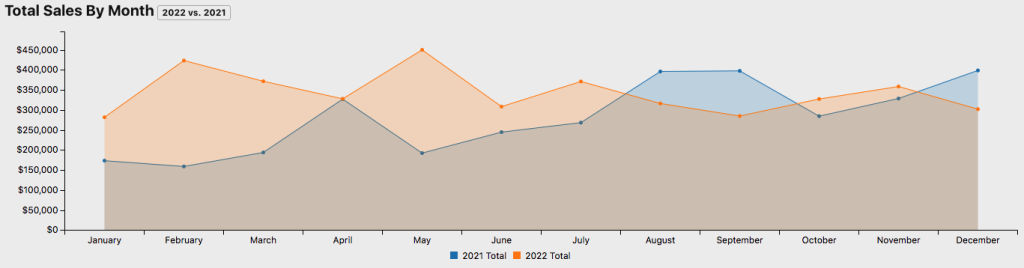
This is another way of saying that we’ve been fighting burnout for three years. We opened an additional warehouse in Cleveland about two years ago, which now handles 67% of our shipments and 78% of our receiving. Our staff has tripled in three years. We are aiming to increase warehouse capacity again later this year, as it is clear that inadequate space is our greatest impediment to growth.
As you can see, the “slow months” for most publishers of January and February can be some of our busiest. And our annual returns are a staggeringly low 2.08%.
Our success continues to be based 50% on what we publish and 50% on how we publish. Meaning that we mostly sell to stores who purchase all of their books from us and so our salespeople don’t stick them with hyped books that they cannot sell. 99% of our books are evergreen, so we aren’t fighting a timer to make them burn bright before they fade away. Best of all, the practical skills and values in our books are what the world has wanted for at least the past 27 years. Probably longer. The need remains vast.
In 2022, we added 2,576 more independent stores that now order from us, bringing the total of retailers that stock our books to over 12,000.
We have seven co-owners, though all profits are shared with our entire staff. In 2022 we were able to increase our budget for wages by 32%, which included a round of profit sharing in December. Because of your support, we are also able to offer health insurance and are instituting further worker benefits in 2023.
The books keep arriving from the printer, just about every day—despite these historic supply chain delays, plus labor and paper shortages at the printers! It continues to be a fascinating time to do what we do. And we are excited that this is finally the year where we will release the beta version of our software to empower other publishers!
And if you really want to get into the nitty gritty of publishing, check out our podcast.
But before we get too tired, let’s take a look at the numbers.
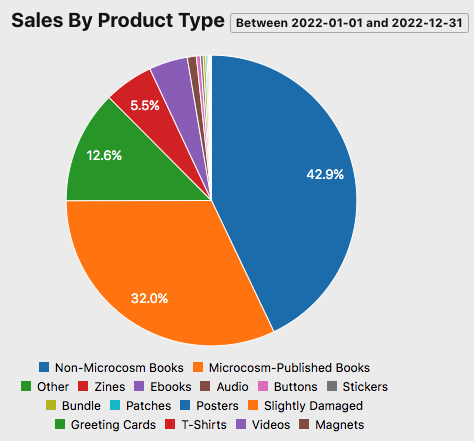
Our total sales for the year were $4.2 MILLION DOLLARS, with our own publishing comprising about 57.1% of our sales:
And here are our bestsellers for the year by dollars earned (minus expenses like printing and cover design):
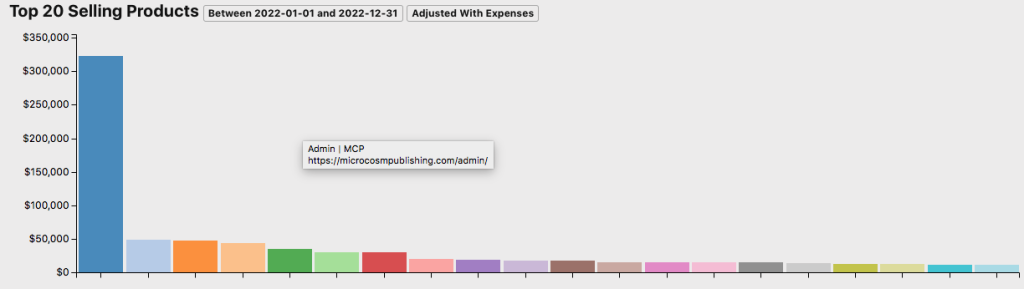
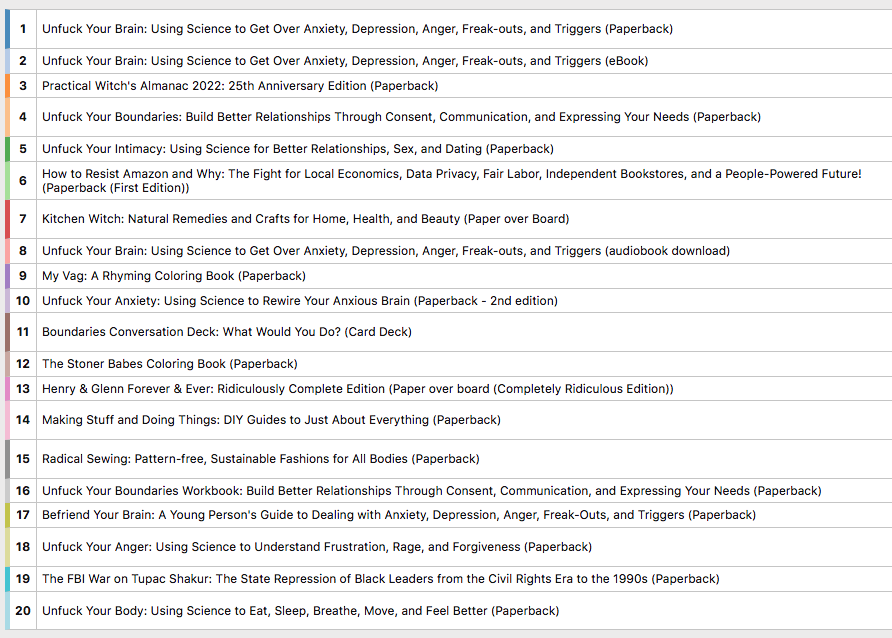
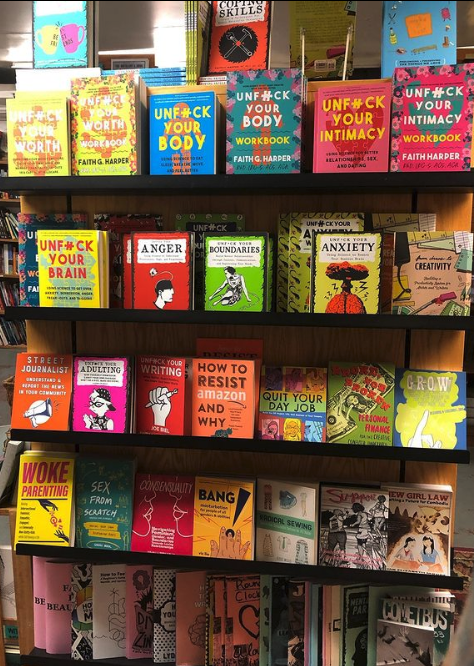
UNF*CK YOUR BRAIN, which we published in 2017, is still outselling the following eighteen (or even 50) books combined by a wide margin—combined. This one title continues to comprise 10.73% of our total sales. Even if you ignore this aberrant title, it was a phenomenal year. We published 41 new books and about twice that many zines. And healthfully, 100% of the titles selling in the top 20 were published prior to 2022, meaning that they will continue to sell for years to come (and we expect our 2022 publications to shine this year).
So where did all those millions go? (We still can’t believe we’re talking about our company sales with all these digits.) As is written into our company bylaws, we invested it all back into the company and into our workforce, including hiring new workers and those profit-sharing employee bonuses mentioned above. Nobody got a yacht, but we all got by. You can see that piece of the pie alongside the rest of our outgoing money below.
Expenses for this year were $4.2M, which notably includes the self-financing of our continued growth (as opposed to, say, a bank loan):
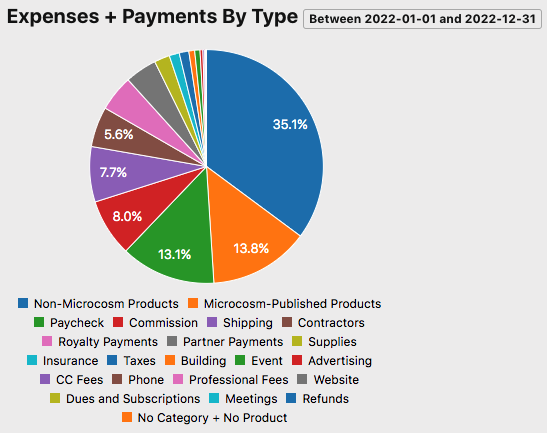
As you can see, our biggest expense is increasing inventory to fill those warehouses, followed by payroll and sales commissions.
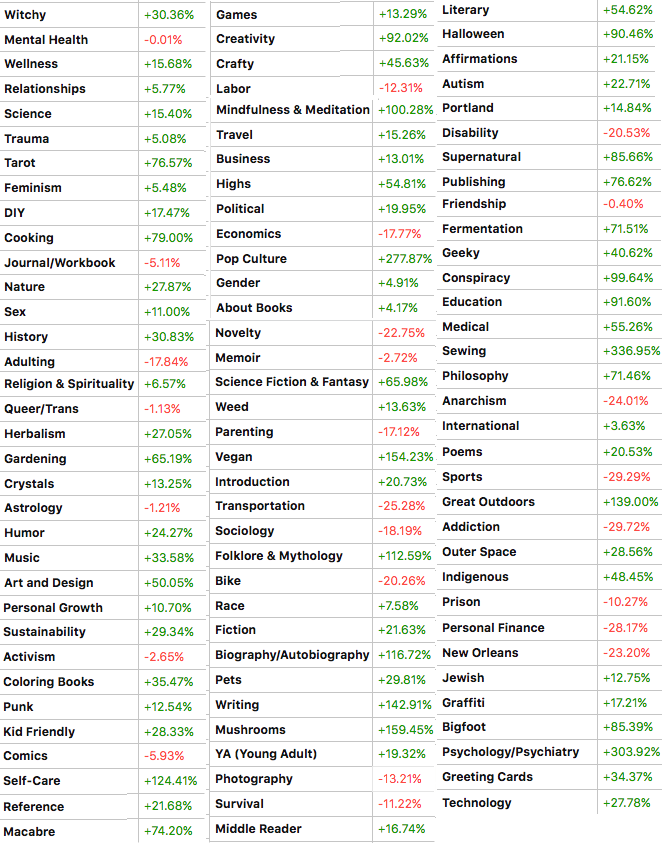
What trends are we seeing in our patterns? What kinds of books are popular for us? Here’s a breakdown, descending by dollars, in terms of changes in sales by subject over 2021:
Where are we selling our books? Funny you should ask:
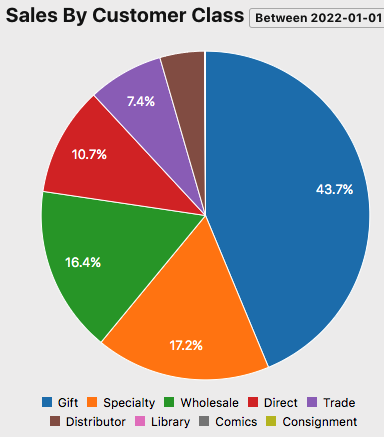
We are now mostly sold in gift shops, a major change from being primarily sold in specialty stores over the past 25 years. Bookstores now comprise about 11% of our sales, about the same as stores and charming individuals who order directly from us.
Remember: when you order directly on our website, the author’s royalties are doubled and everything left over goes into profit sharing for our entire staff!
Thank you for supporting us, our authors, and our team in the last year, whether as a reader, partner, or member of our team. The last three years have been difficult in myriad ways, but it’s been heartening the way our entire culture seems to have turned to books for comfort, meaning, perspective, and a little bit of escape. We’re prouder than ever to get to play a role in bringing people and books together.