Tagged punk

Commute Diary #2: Music and Road Rage
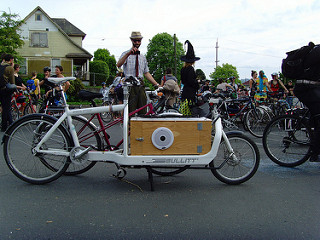
sound bikeAbout a year ago, I was visiting my pal Davey’s bike shop (the recently exploded & then reopened G&O Family Cyclery in Seattle) and impulsively bought a little, waterproof speaker that straps onto my bike’s handlebars.

It immediately changed my daily life. Instead of a tedious, repetitive daily chore, my commute instantly became a solo dance party on wheels. Suddenly, fewer people would pass me in the bike lane. Was I inspired to keep pace with the music, or were they hanging back to rock out to my tunes? Hills seemed less steep, and the familiar sights I passed every day took on new meaning and interest in alignment with the soundtrack.

I also noticed, though, that my music choices majorly affected my experience and how I rode. One day I put on a particular punk album, and rode recklessly and made unsafe choices—that was immediately deleted from my phone. For a while I biked to work listening to the Riot Grrrl bands I’d never explored in the 90s, and would arrive feeling energized, empowered, and all worked up and ready for the day. But eventually, I realized that listening to Bikini Kill, although it spurred me along to great speeds and passionate determination, was also giving me a major case of road rage. Every little clueless, reckless, or thoughtless thing that someone in a car would do would set me cursing; even just driving past and existing on the road at all seemed inexcusable. It was exciting, but not fun, and not how I wanted to interact with the world or feel every day.

So I deleted all the angry music, too.

What did that leave? Well, my friend had just turned me on to her favorite band, Cloud Cult. Sitting in her house and listening to it for the first time, I was skeptical. The lyrics were sentimental and their extreme positivity turned me off to an extent that a therapist could probably have a field day with. The musical style was not one I was used to enjoying. I didn’t hate it, but I didn’t relate to it, either, and I am sorry to say that I did judge it a little, despite my best effort not to.

But now it was the only album left on my phone. And the first time I played it on my commute, the difference was amazing. The upbeat tempo worked perfectly to bike to, and the extreme positivity … as well as the active attempt that I had to make to embrace it … gave me a whole new attitude on the road. Someone passed me too close and I grinned. I witnessed a near crash, and went around it, whistling.

Have my musical tastes changed from angry to posi? Absolutely not! I mean… okay. Maybe. Go figure. At least having a music-induced mellow attitude on the road during my commute gives me the time and space I need to have a heart-to-heart with myself over my lifelong musical choices and their connection with my emotional state. All that for only the cost of a bike speaker and a few albums? Priceless.

– Elly
Jazzpunk and Underdogs: An interview with Rob Morton of the Taxpayers

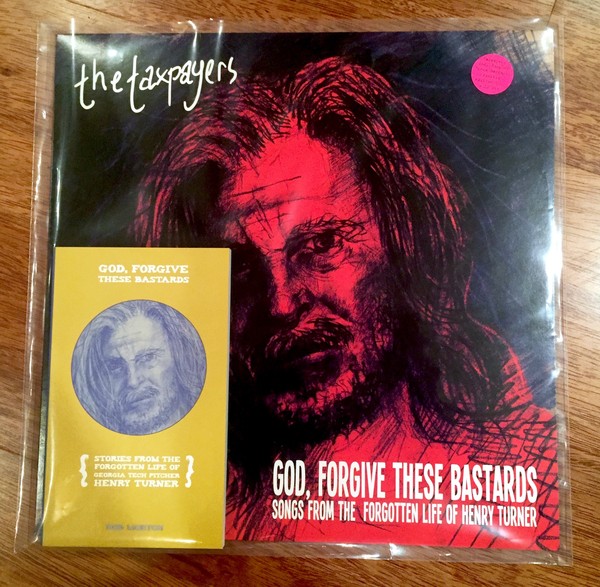
god forgive these bastards record book setGod Forgive these Bastards is an underdog book about an underdog. It doesn’t really resemble any other Microcosm book so we tend to have a bit of trouble selling it—”Can we interest you in a book about DIY projects, a graphic novel about activism….and a novel about a college baseball player who ended up living on the streets?” doesn’t totally make sense to everyone. Once you begin reading it, though, it draws you in and sticks with you long after you’ve read it, as our intern Natalie recently found.

The book is good on its own, but it’s at its very best paired with the jazzpunk album of the same name that it was written to go along with it; the songs also tell stories of underdog anti-hero Henry Turner and his forgotten life. The record has been out of print for several years, and we are stoked to announce that we’ve reissued it in a limited colored vinyl release, packaged with the book—get them right here!

In honor of the release, we asked Rob Morton, whose brainchild both book and record are, a few questions:

1. The origin story of this book + music set is pretty amazing. The novel + vinyl record set isn’t very common, nor is the ambiguity of the writing and packaging—it leaves you wondering whether or not it’s fiction, and it sounds like that’s intentional. I had a very hard time filling out the decidedly not-ambiguous distribution paperwork for this! Why did you go this genre-boundary-destroying route? How do you handle the confusion it creates?

When the idea came up, it was during a time in our lives when we had a lot of energy for this kind of stuff. Me and the other Taxpayers were high on all these big, fun ideas, like living in Florida in a storage unit, making a living as a Jimmy Buffet cover band, throwing new kinds of music festivals, etc. The Henry Turner project seemed like another neat way to challenge ourselves.

In regards to handling the confusion that the project has created—we don’t, really. We just kind of hope that folks either enjoy it and get something out of it, or don’t. It is funny to get occasional emails from people that say, “Hey, I knew Henry”, or “Hey, you guys are taking advantage of this guy’s life”—at first, we were going to just let folks run with it and think what they will about it, but we decided to divulge the fact that the story is largely fictional because we thought it would be more fun to let others “in” on the secret.

2. Why did you decide to tell / sing / write a redemption and forgiveness story?

You know, that’s the way that I’ve explained the story in the past, but some other people have made the (reasonable) point that it’s not really about forgiveness, etc. Dave from Hymie’s record store in Minneapolis did a good write up where he said “The lazy listener might take from God Forgive these Bastards a simple lesson of forgiveness and understanding. I suppose that can’t be a bad thing, but the fact is that nobody forgave or understood Henry Turner.”

I think that’s a good take on it. Personally, I like redemption stories where shitty people get a shot to do something not shitty, maybe because I’ve done things I regret and I want to believe that nobody is all bad. But whether the Henry Turner story illustrates that point or argues the opposite–that people are incapable of changing–is up for interpretation, I guess.

3. Please tell us about the Gathering of the Goof Punx

It’s a music and culture festival we (the taxpayers) used to put on. We wanted it to be for the goofy weirdos that didn’t really fit into other subcultures, including punk. There were parades, games, movie screenings, and of course, shows. Some of my heroes played the festival, and I met some new heroes at the festival, like the kid who came out for the first time in front of a room of 300 people during one of the shows. It’s been a few years since we’ve put the festival on, and we’ve talked about doing it again in the future, but it takes a LOT of work and coordination, so it’s kind of on the backburner for now.

4. It’s been a while since you recorded this album and wrote the book, and the album has been out of print for most of that time. What artistic endeavors have you been up to since? What comes next?

We’re working on a new Taxpayers record right now, which should be released by summer of 2016. Andrew and Noah play in Shitty Weekend. Dylan plays in Tensor, Backbiter, and a few other bands. Kevin plays trumpet in some jazz bands. Me, I garden a lot and build shitty chicken coops. I’m learning to play clarinet and piano. I write a couple of songs per week. I played drums in a group called Negation for a while, but we have been broken up for a while now. My partner Elise and I have a band called Trash Swan that plays a show once every two years. Mostly, I’ve been slowly learning how to safely use a reciprocating saw and angle grinder without hurting myself or damaging the stuff I’m working on.

You just read an interview with Taxpayers singer and God, Forgive these Bastards author Rob Morton. Get his novel-record combo here!

All the news from
the misfits in print

Get a free ebook & 10% off your next order