Unfuck Your Breakup: Using Science to Heal and Thrive after the End of a Relationship or Friendship
How to make healthy endings
Breaking it off? Got dumped? Parting ways with a pal? Ouch, that hurts. Even beyond the heartache, embarrassment, and logistical strain of the moment, breakups can summon up all our old baggage to play havoc with our lives and heads.
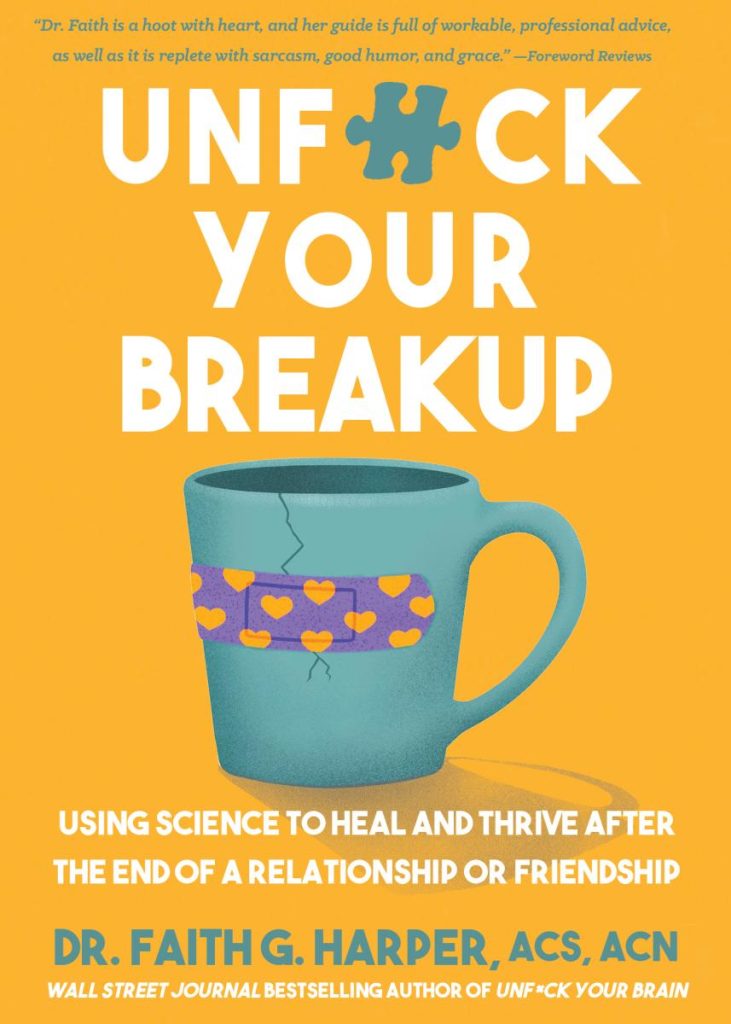
Dr. Faith G. Harper, bestselling author of books like Unfuck Your Brain and Unfuck Your Intimacy, brings you a kind, relatable, and plain-language guide to all things break-up: deciding to do it (or not), doing the thing, and picking up the pieces afterward to build a life that suits you better than ever. Whether or not the breakup was your idea, or if the partnership was romantic, sexual, or platonic, no matter the seriousness of the bond or the shared responsibilities and finances involved, parting ways can be a canon life event with powerful transformational potential as you rise from the wreckage. And it’s never too late to come back to your best self.
Keep reading for an excerpt of Dr. Faith G. Harper’s Unfuck Your Breakup, shipping now from our site and available through your favorite purveyors of indie books!
People don’t generally come to my books when things are going fantastically well in their lives. This book is definitely no different. You’re likely reading it after a fresh breakup, or to prepare for an impending breakup, or you’re a nice human wanting to better support someone in your life going through a shitty time.
Since this book is especially for fresh grief, I’ve structured it a bit differently than usual. It consists of little manageable bites on different topics surrounding breakups interspersed with advice shared by other readers. So you can easily dip into whatever you’re needing at the moment. Or you can let the universe decide by opening to any page randomly and seeing what you find. You can also read all the way through just fine. It is set up to flow properly from section to section, but it’s not a requirement in order to get best use out of the book. Yay for doing whatever is right for you!
Because my books are known for being heavy on the science end, I’ve still shared all relevant research within each section so you can see exactly what research I am talking about when I discuss decisions about public disclosure, or rebound relationships, or any other various topics.
This isn’t a repeat of my grief book, and if you are in the throes of some heavy pain that feels unending, that book might be a really good one for you. Also therapy if that’s accessible to you. Throughout this book you’ll see me suggest therapy, maybe even more so than in my other books. That’s intentional, because we tend to allow ourselves to seek therapy for post traumatic stress disorder, depression, anxiety, and other emotional health issues. And we may not think of a breakup as being an emotional health issue.
You may be just fine and need a little hug and a pep talk from this book, or you may need more support. So the places where I say, “This might be a good place to try a sip of therapy” and you resonate with the situation? Maybe try a little sip of therapy, see if you want more. Oftentimes, breakup therapy is only a few sessions. Just someone to make space for you to process, to ask the hard questions, and to help you get the next season of your life on track. As with the price of everything these days, it may end up being cheaper than a commiseration night out with your friends.
I also put out a call to the internet asking two questions:
What healthy coping strategies did you find the most useful in healing after a breakup? and What great advice did you get regarding a previous breakup? I didn’t realize it at the time, but when I started getting responses, I noticed that they were a really good test of the book itself. I got a ton of cool ideas that I interspersed throughout the book to augment my suggestions with real- life applications. And in case you are wondering about how people are credited for their contributions? Everyone chose how they wanted to be credited (first name, full name, online handle . . . no one said keep me completely anonymous, though that was obviously an option, too).
Oh! And one more thing!
Oftentimes, when discussing interpersonal violence and breakups, we don’t talk nearly enough about coercive control and the violence it can lead to. Especially when you are leaving. So beyond just talking about those statistics, I included an appendix with a bunch of information on coercive control and the different forms it can take. Because for many people it feels incredibly fucking normal, especially when it’s not coupled with any physical violence.
Listen to any hinky feelings you may be having about your safety around your ex or soon-to-be-ex. And read that section to see if you recognize any patterns that weren’t evident to you before so you can be as safe as possible in a potentially dangerous situation.
I wish I could make everyone tea and cookies, and give you a cozy blanket for snuggles, and let you have a good cry and then a nap on my couch after we chat. Unfortunately, I only have a couple of sofas available, but the chat part is here, and you can load up on your own comfort items while you read.
And take care of yourself, ok? You know what I mean, and you know if you aren’t doing that. Grief tries to tell us that none of these things matter right now, but they really, really do. So please believe me over your sad brain. Take your time re-engaging in the world if you need to, but take care of you in the process. And let the real ones in your life show up for you and do the same. I bet a lot of them also have tea and cookies and cuddly blankets and good listening ears if you are brave and vulnerable enough to ask.
Let’s get started.
Learn how to heal after a friend or romance breakup with Unfuck Your Breakup by Dr. Faith G. Harper, now available direct from Microcosm and a shelf near you!