Meet the Microcosm workers: An interview with sales director Thea Kuticka
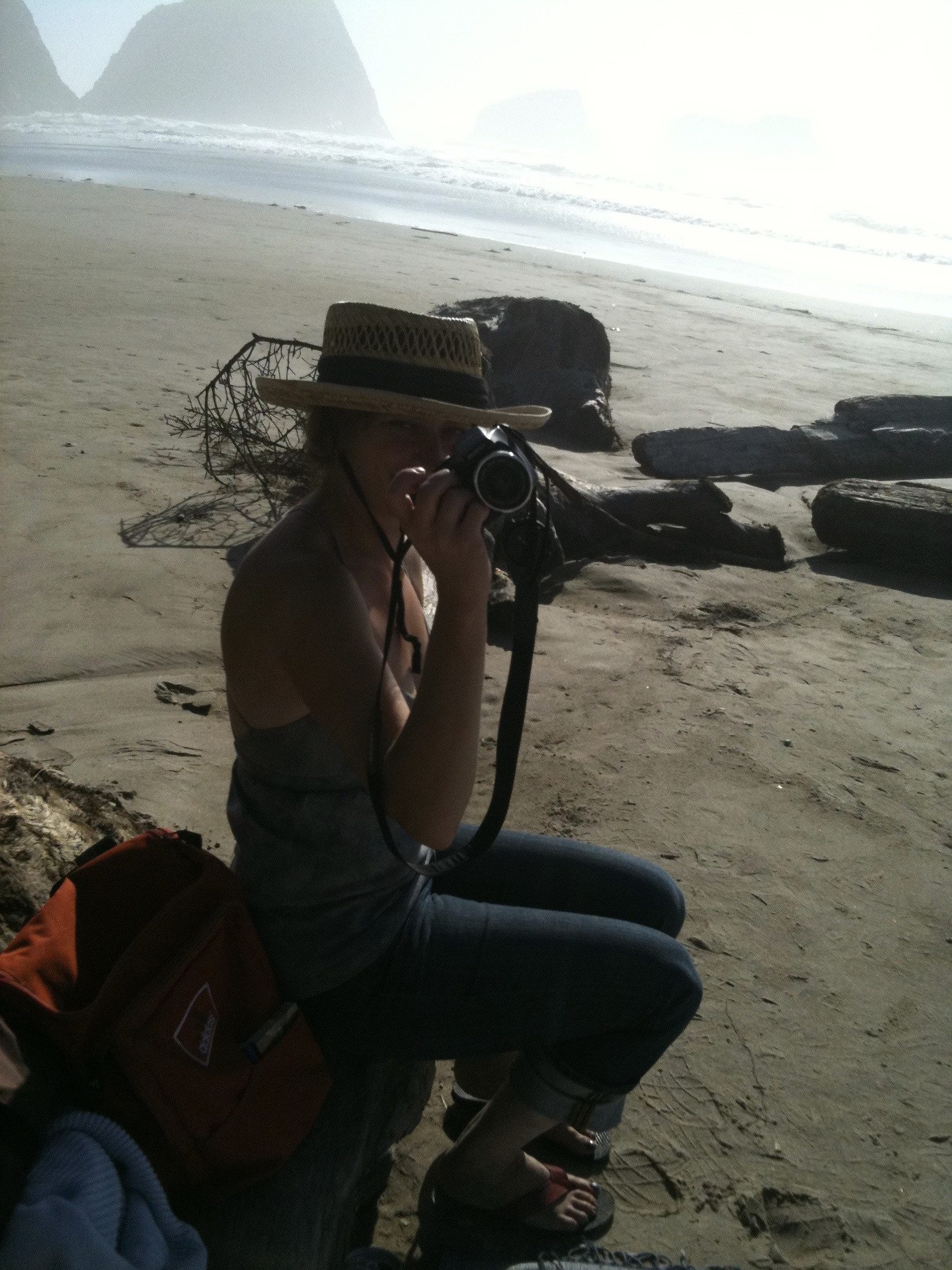 A big welcome to our newest Microcosm worker, sales director Thea Kuticka. Thea has been here for a month, getting to know our systems (aka, epic wading through lots and lots of spreadsheets), getting acquainted with everyone, and sharing her experience and insights from over a decade in publishing (and also her home grown blackberries, yum!). I asked her some questions over email.
You’re the newest staff person at Microcosm. How are you settling in? What’s your favorite part about your work space here?
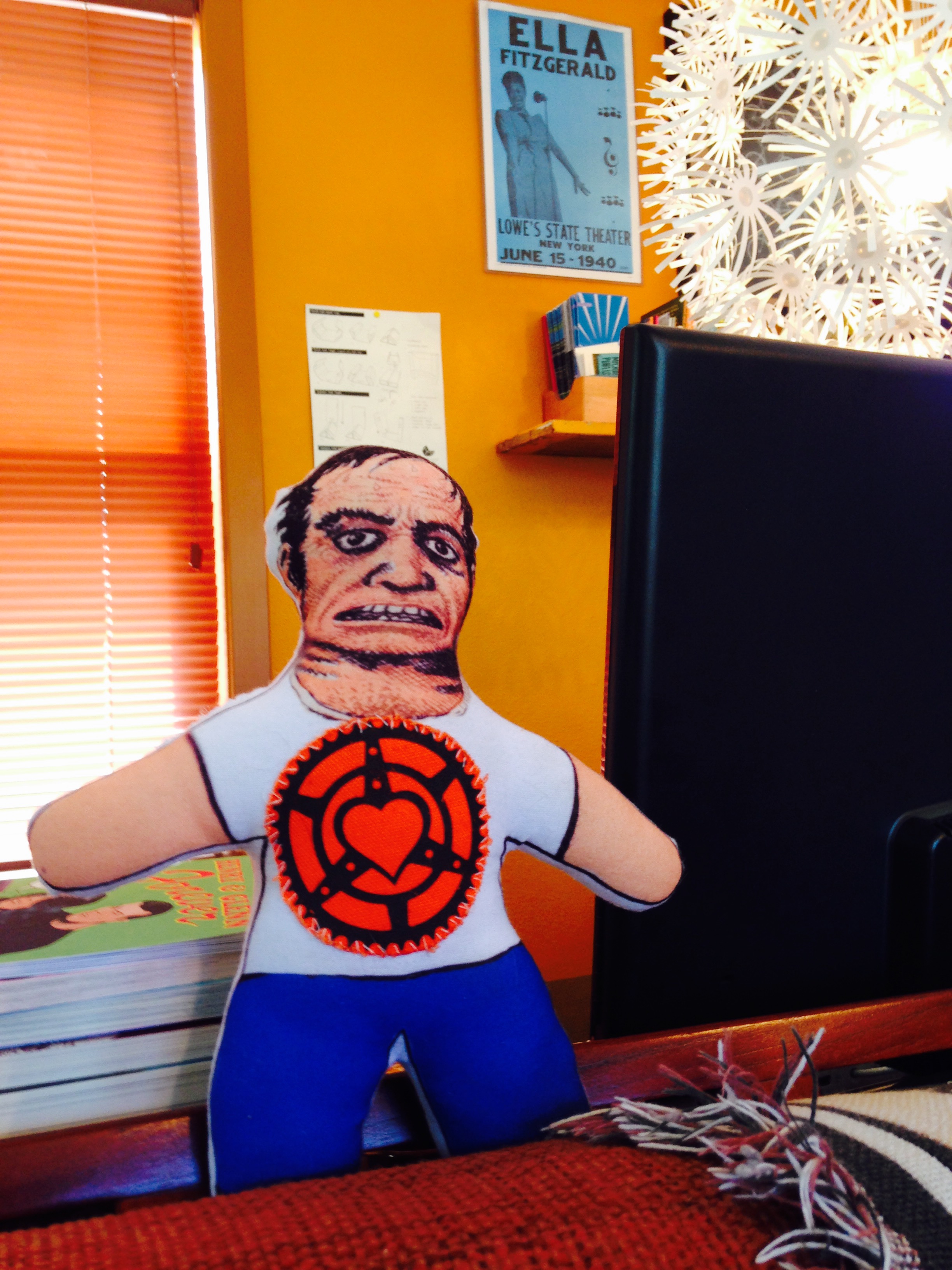
I’m very excited to have landed at Microcosm and feel lucky to be working with such a welcoming group. My favorite part of my workstation is a hand-sewn Harvey Pekar mascot sporting a Microcosm patch. Pekar is an excellent reminder of the extraordinary events that can come out of ordinary life.
What’s been the most fun?
Spontaneous conversations about food and book cover art and the pink plunger. [Editor’s note: We learned something new in the office last week: pink plungers are designed for sinks with a flat bottom. Incidentally, we are always on the look out for books to publish about DIY handy work!]
You came to us with a whole lot of publishing industry experience. Can you recap some of the highlights?
I caught the publishing bug in Eugene, Oregon, where I started out watching friends assemble skate mags with glue and scissors and plenty of hours at Kinko’s. I soon volunteered with some literary magazines (Emergency Horse, Two Girls Review, and Northwest Review), and was lucky enough to get a job at Black Sun Books (I harassed the owner daily until he finally gave in). At Black Sun, I found an amazing mentor who taught me a lot about acquiring and selling books, by hand, by suggestion, and by listening. Later highlights include working for a nonprofit Chicana/o publisher in Arizona, then joining Dark Horse Comics at a time when the big box stores were clamoring for manga and comics in book format. More recently, I fell into an outreach role for a start-up publisher with a list of beautifully created children’s books.
What’s your favorite kind of book to read? Any recent standouts? Or long-time favorites?
 My favorite kind of book to read is one that will inspire me creatively. I look for stories that come from a creative impulse. These are inspired novels and memoirs such as Woman Warrior or Blood Meridian or Giving Up the Ghost. I’ll read National Book Award books and then pick up a book on the Zodiac Killer.
I don’t like to admit this, but I am an impatient reader. If a book doesn’t grab me in the first few pages I tend to set it down. I love all types of cookbooks though (eye candy!), especially about fermentation (Wild Fermentation, yes!).
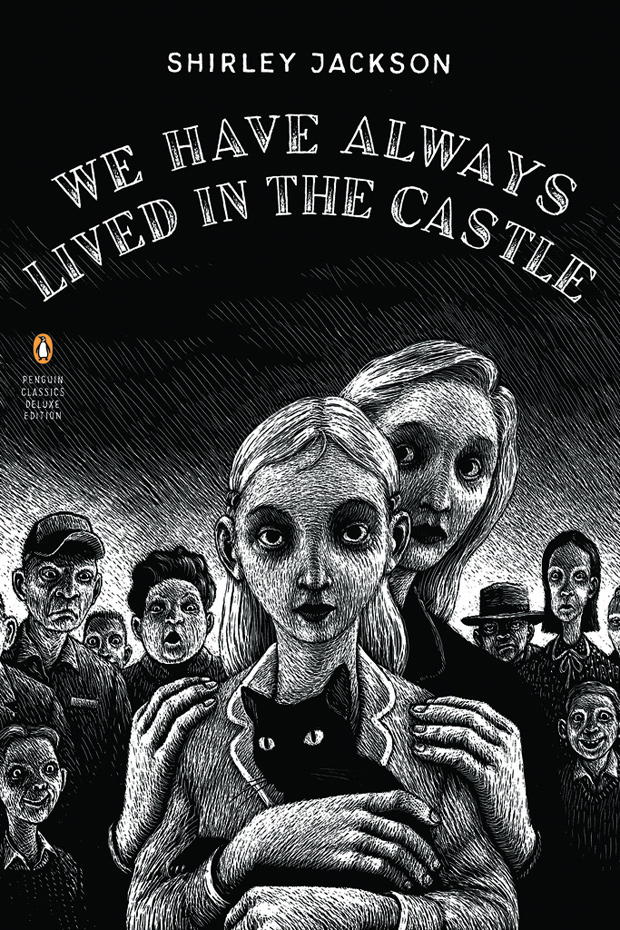
New favorites include Ruby by Cynthia Bond, a haunting ghost story of survival with a satisfying dose of magical realism. I recently discovered Shirley Jackson’s We Have Always Lived in the Castle. A new edition had been released with this haunting cover art by Thomas Ott and I had to read what was inside. See how easily persuaded I am?
What’s your favorite kind of knotty publishing problem to figure out?
There’s something very communal about sharing a good book, and for me the question is: How to get a book that I love into everybody else’s hands. Once I discover a book, I can’t help but talk about it and want to share it. There’s something intimate about reading that touches all of the senses—this may sound weird, but if a book doesn’t feel good in my hand, I have a difficult time sticking with it for two or three hundred pages. I know, they say don’t judge a book by it’s cover, but the thing is we do. We judge the cover, the size of the text, the blurbs on the back and the people who are saying, read this fucking book, it’s a New York Times pick damnit!
It’s not enough to create a good book. Now you’re competing with all of these other forms of entertainment, because for most people, reading is such a commitment (wait! There’s a movie?) that the challenge for publishers is to overcome information overload. Readers think they already know what they want to read until they find the one book on the one subject they haven’t yet discovered. It’s like being the first on your block. It’s what makes you want to share. We’ve become such expert browsers that we may have forgotten that at the heart of all of this is a community, and for a publisher like Microcosm, books are the community that informs and inspires. All of the rest—the social networking, the online gamers, and niche markets is gossip that involves books, so it may as well be Microcosm’s books. There’s so much potential emerging in the industry and that bodes very well for readers and writers alike.
Can you talk a little about the direction you think the publishing industry is heading, but also what you would like to see the future hold for books and readers?
 I’m optimistic! And this is coming from someone who tends to see the glass half empty. The desire to read is as strong as ever—it’s just how we read and the tools we use to access those ideas that have changed. It used to be TV that would kill the book, then it was gaming, now it’s ebooks. But what hasn’t changed is our insatiable need for more—we still want to be entertained, inspired, discovered—there’s a huge collaboration going on now between readers and publishers.
What this all means? The consolidation of big publishers has created opportunities for smaller publishers by providing a place where readers and authors can feel understood and appreciated. A company like Microcosm now has the ability to respond more quickly to market changes than a larger publishing house. Because readers are savvy, they adjust their habits to conveniently fit their needs. The variety of platforms also increases the ability for readers and publishers to get the word out. The downside is that there’s more of a strain on resources for small publishers when it comes to outreach. But that’s a different conversation.
How we discover, read, and access books may change, but if a publisher rethinks their strategies by printing closer to their distribution centers (domestic) and adjust their print runs to more realistic numbers, they will be more nimble in the long term.
Lots of books don’t find their readers no matter how hard you try, but it helps to take chances, and the digital world (because Twitter is free buzz) helps publishers do this—the tone is less formal, more collaborative, but the goals are similar. Rather than depending on the Oprah Factor or the coveted Publishers Weekly review, publishers can begin to understand that their readers have become some of the best advocates and sales people for the books they love. The difficulty I see now is how a small publisher can maintain an edge and still remain sustainable.
This is part of a series of interviews with Microcosm workers. The last interview was with Nathan Lee Thomas.
 If you call or visit
 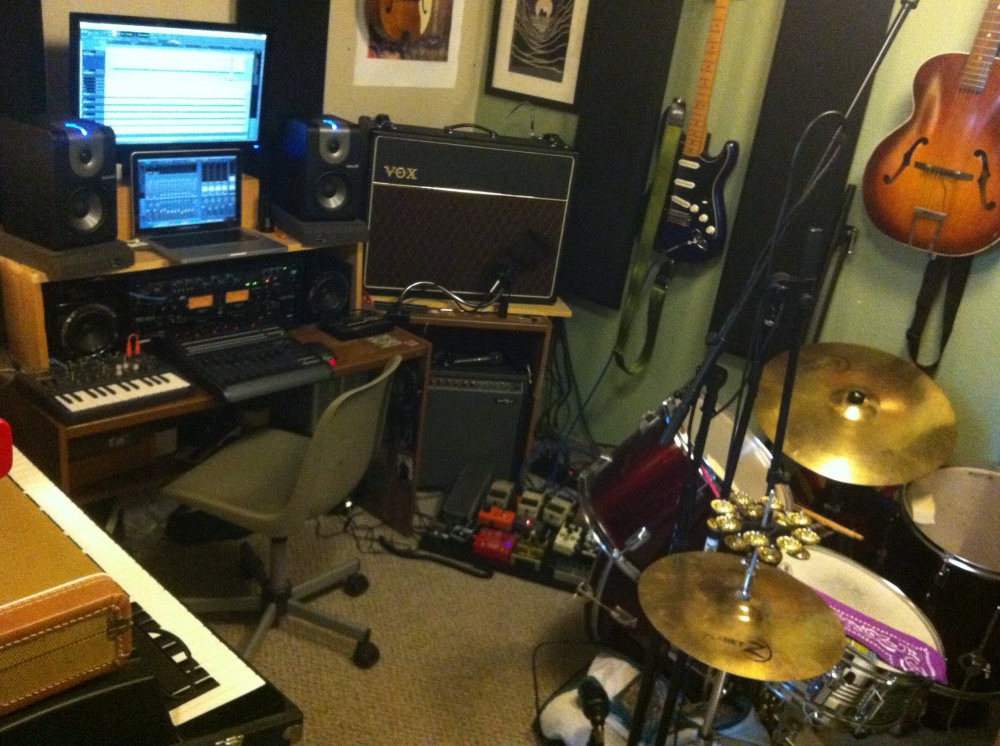 My quest to interview all the Microcosm workers about their work and lives and favorite things has finally reached our warehouse manager, Jeff Hayes, who has been here longer than just about anyone else. Instead of a picture of himself, he chose to submit a photo of his recording studio. For an even better picture of the soul of Jeff, check out his staff picks
 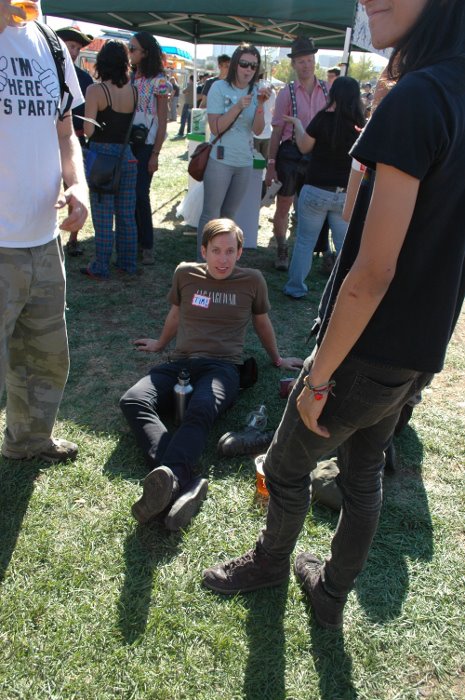 In my quest to introduce our workers to the world, I sent some prying questions this week to Tim Wheeler, who’s been running Microcosm’s publicity operation since 2012, when he worked from a tiny desk atop a lofted platform atop ten teetering feet of stacked boxes of books. Now you can find him behind a comparatively spacious desk upstairs in our new office, barricaded behind stacks of advance copies of books that haven’t come out yet. Read here for more about Tim in his own words—and you can also scope his taste in his staff picks
 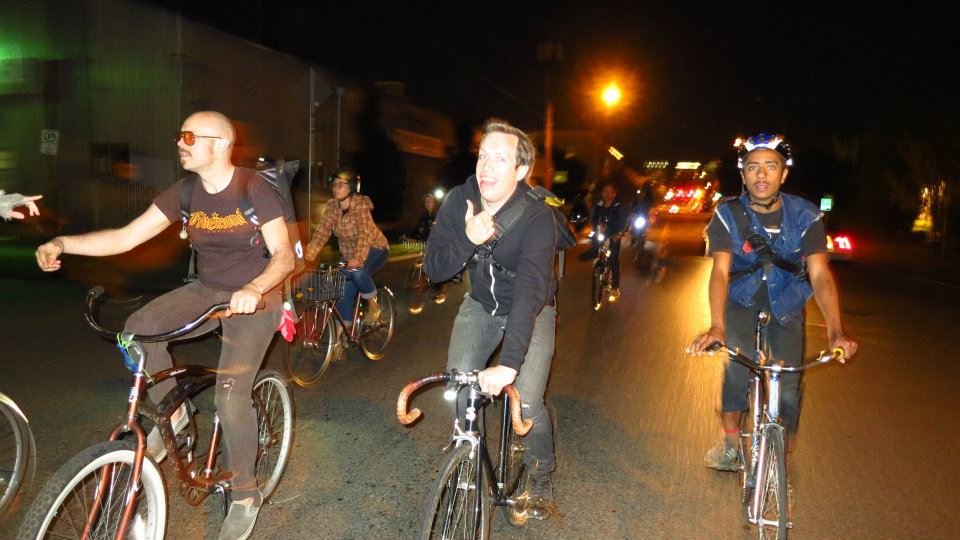 a) Place in Portland: I feel like I need to split this into two categories, since Portland is a pretty great city surrounded by a lot of amazing nature. My favorite outdoor space is the myriad of hidden beaches, rocky outcroppings, and tree lined spots along the Willamette and Columbia rivers, but my favorite is actually a little outside Portland. Hog Island is south of Portland on a stretch of river dominated mostly (and unfortunately) by private estates with “No Trespassing” signs on their docks, but Hog Island is a small, uninhabited island close to a sheer cliff on the west bank of the river. Accessible only by boat (or in the case of my friends and I, a homemade raft of scrap wood and metal pieces with my bike strapped to the side), it’s really just a football field sized chunk of dirt with some trees and sandy beaches, but it feels like you’re hundreds of miles from civilization while floating in the calm stretch of water next to it. As far as indoor spaces, Saraveza happens to be my neighborhood bar, one of the best beer bars in the country (which I’m very much a fan of), and full of some really damn friendly people. It’s the perfect spot to hang out for a bit on a rainy day.
  c) Snack food: My favorite foods are of the Mexican variety, but as far as snacks, I can endlessly shovel hummus into my mouth. All I need is a chunk of bread or cucumber or chip or finger.
 So, what do you do here at Microcosm?
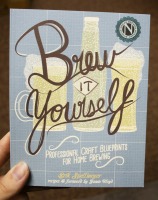 Not too long after I began being paid as a staff member, Joe asked me to take a look at a manuscript on home brewing. My experience in the brewing industry made me the ideal candidate, so I looked it over. The idea was to fit this title into our DIY series, and as I read on I realized so much was missing. I’d read home brew books before and worked in the industry, and as I compiled notes for the book, I took notice that they were growing beyond the size of the manuscript. Once I related this to Joe, he decided to scratch the original and have me write the book. I now had the chance to write the book I wished I’d had when I began home brewing. I never thought I’d publish a book on beer, but the more I wrote on, I realized the more I had to say on the subject. It was rewarding and fun to use the knowledge I’d accrued while working at Microcosm to guide me along, and in my opinion, it was all over too quickly.
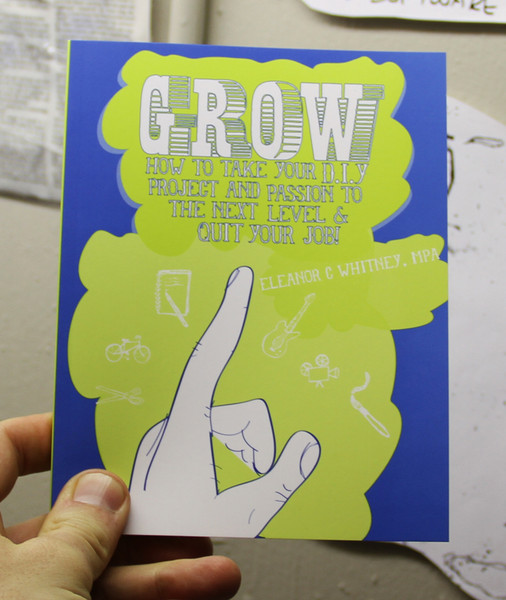 Grow: How to take your do it yourself project and passion to the next level and quit your job! is a practical field guide for creative people to achieve success and sustainability on their own terms. Part of Grow’s mission is to empower creative people to come up with innovative solutions to make their creative passions sustainable career options. The first step in that process is to assess where you are and define where you want to go. In the spirit of Grow I posed a series of questions to Meggyn Pomerleau, who designed the book, about her career and goals so far. The issues that Meggyn outlines in our conversation are the ones that inspired me to write Grow: How to balance your creative passion with “real life,” how to understand what you and your creative work is worth, and how to face down an uncertain future with a careful planning.
 – My life is design, despite having the office job. I dream about typography; I pay attention to advertisements and details in logos, banners, and posters; and I’m constantly brainstorming pieces in my head. If I had to break it down in numbers: 40% of my life is the non-creative office job, 25% is actually creating, and 35% is everything else.