Indie Bookstore Love: Ebenezer Books in Johnson, Vermont
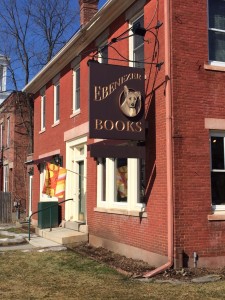
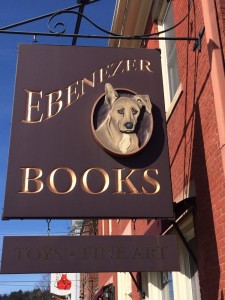
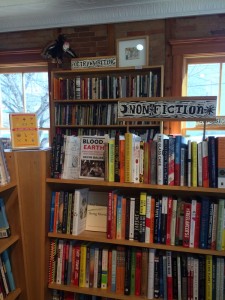

We’re celebrating our 20 years of independence by highlighting a different indie bookstore that we love every month for a year! This month, we’re featuring the wonderful Ebenezer Books at 2 Lower Main Street in tiny Johnson, Vermont. They first caught our eye because of their prolific and eclectic zine orders.
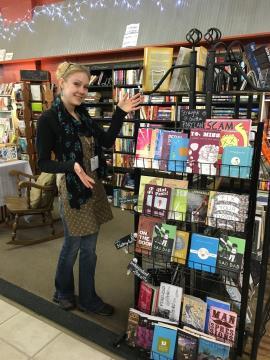
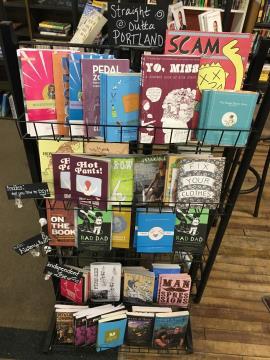
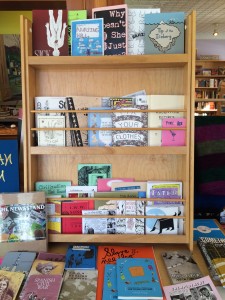
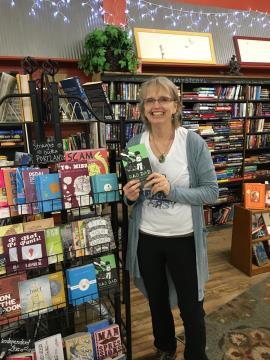
We asked Ebenezer’s owner, JJ Indeliclae, a bunch of questions and she sent a bunch of photos, including one of the rack right inside their front door that features a ton of the zines we distribute and publish, as well as the American Quran, which she says she added to her front display in solidarity after someone freaked out about it being on display in another Vermont store.
1. What’s the story of Ebenezer’s? I also have to ask about the store’s name… did it come from a grizzled old New England settler, or is it about a ghost of Christmas?
Neither, actually: I named Ebenezer Books after my dog, Ezer. “Ebenezer” is most commonly translated from Hebrew as “place of refuge,” or, more literally, “stone of help.” For me, bookstores have always been both. My Ezer deserves some of the credit for landing me here in rural northern Vermont. (He is a bit grizzled now, almost fourteen… and there is an Ebenezer Road nearby, so there may well have been an old New England settler by that name. The Dickens reference is pretty slant.)
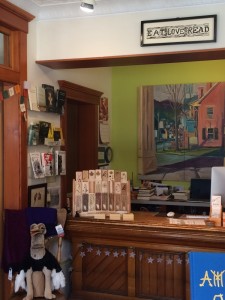
I bought the store in 2008, just weeks before the recession hit. Ebenezer Books is a true brick-and-mortar, inhabiting a 100-year-old bank building. The founding bookseller on this site, Stacey Burke, restored the original tin ceilings and created a beautiful space for books (in 1998).
2. You sell some of the books we publish, and you also buy zines that we distribute! At this exact moment, what is your favorite Microcosm book, your favorite non-Microcosm book, and the zine that stuck in your head the most in the last year?
Yes! We are thrilled to carry Microcosm zines and books. It’s an almost-daily pleasure to watch people discover zines; I’m continually surprised how many of our customers are discovering them here for the first time. (“Excuse me… what are these little books?”)
It’s tough to pick a favorite Microcosm book! Hot Pants, maybe. Or J. Gerlach’s Simple History series. I’m a longtime fan of Ayun Halliday, so I enjoy recommending her Zinester’s Guide to NYC. My current favorite non-Microcosm book is forthcoming in May: Siddhartha Mukherjee’s The Gene. The zine that stuck in my head the most from the past year? There are so many contenders that I’m going to pick the title that first struck me from another store’s zine rack: We’ll Never Have Paris. I’m partial to literary collections.
3. Your bookstore is small but mighty—how would you describe your customers? What keeps you going?
Johnson is a small town, but it is the home of the Vermont Studio Center, the country’s largest residency program for writers and visual artists. They draw people active in the literary community from all over, so many of our customers come from far afield. Consequently we are able to maintain a rich and deep selection of books, especially in poetry and literary fiction. We serve our neighboring towns and are pleased to have customers in an increasing radius from Johnson. Some of our seasonal traffic comes from neighboring ski resorts, and many people also come through town on road trips to view fall foliage. Bookselling is definitely a labor of love. Our best customers share our veneration for the physical book, and their loyalty is a force.
4. What do you glimpse in your crystal ball for the future of books?
I have to believe that there are enough people who care about cultural literacy to continue to buy books, and to buy them from independent channels. I’m encouraged by the resurgence of independent bookstores very recently, though this national trend has yet to buoy us much, as bookstores in particular depend on a political awareness that is still evolving. Book industry upheavals are not yet played out. My hope is that more and more small independent bookstores will thrive, and in turn support small publishers such as yours: especially the ones that care about literary and production quality.
This has been an interview with JJ Indeliclae, owner of Ebenezer Books in Johnson, VT! Be sure to pay them a visit when you’re next up that way, and support your local indie bookstores in the meantime!
 Last month I was invited to speak on a panel about the arts. I agreed and a month later I received another email, explaining that a woman panelist had canceled and had been replaced with a man. The curator was concerned that having a panel with four men and only one woman might appear to have a lack of diversity. It’s certainly an important thing to consider when putting on a public event. The recent social justice movements around race and gender have gotten gears grinding in people’s heads. At the same time numerous people have expressed to me just how patronizing it feels when the stated reason for sending them an invitation is because of their race or gender, rather than the merit of their work or just how brilliant they are in the first place.
  About six years ago, after much confusion and disagreement about how to decide what Microcosm should publish, I created a set of guidelines for institutional memory in our staff manual.
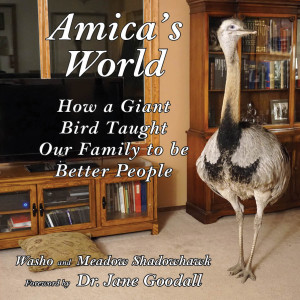 One day I received a phone call from Meadow Shadowhawk, a Native American woman who explained that she had a children’s book about a gigantic bird that lives in their suburban home that was seeking a publisher. I explained how our submission process worked and that we don’t publish children’s books. A few days later she called again, explaining a bit more about her family and her son and the awards that he had won, including one from Dr. Jane Goodall. Meadow explained that Dr. Jane would be willing to contribute a foreword.
 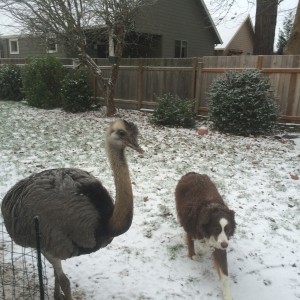 By the time I returned to Portland, with even more photos of the rhea, Amica, in my inbox, I realized what bugged me about an illustrated children’s book: It would be lost in the end matter that the story was real. I decided that it would make a lot of sense to do a photo book of Amica because he is quite idyllic and the story was so interesting and unusual. The family and Dr. Jane agreed and a near-miss was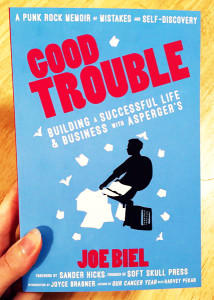
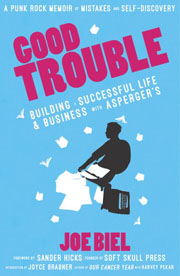
 Thank you. I would like to believe that I’m cautious about everything but most of the rest of the staff would probably disagree. In prehistoric times, a memoir was simply a story. If we’re using marketing terms, a memoir could simply be a nonfiction novel. But a novel has a narrative, characters, plot, a theme, and an arc. Many writers don’t engage the reader as a stakeholder in their writing and many of the memoirs that are submitted to us are expected to be published on the grounds that they have been written. For a memoir to work, it needs to have all of those components and have a clear concept of what it is, who it is for, and how it is different from the pack. My book is for would-be publishers, adult autistics, Microcosm fans, and people who want to start businesses. There needs to be at least 5,000 of these people out there and we need to know how to reach them. I am too close to the work to tell you if mine succeeds but thankfully everyone who I have heard from so far has enjoyed it immensely so I am thankful that I have good editors and that I put so many hours into it.

 For Microcosm’s 20th Anniversary (it’s February 12th!) we decided to turn the whole year into a party celebrating the survival of indie books! Part of that is singing the praises of independent bookstores, keeping the world bookier and better for everyone. To that end, we’ll be shining our nerdy spotlight every month this year on a different indie bookstore that we love.
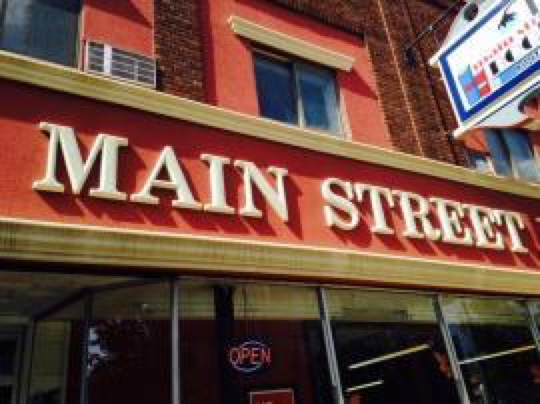
 1. What’s the story of Main Street Books? When and why did it start and what’s it’s role in the community?
  3. What’s your favorite Microcosm book?