In Praise of Human Power: An Interview with Andy Singer
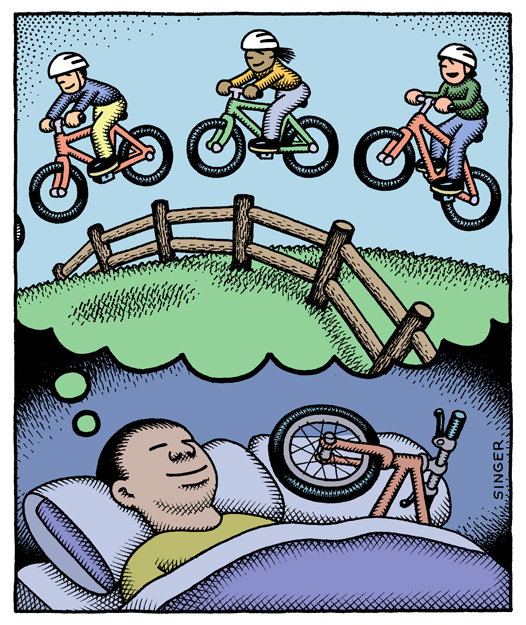 In 2013, we published Andy Singer‘s Why We Drive: The Past, Present, and Future of Automobiles in America. Part history, part original reporting, and part sharp, illustrated commentary, it tells a chilling story of why the US is the way it is. There isn’t any other book quite like this one, and we asked Andy to talk about it and his other work via email.
Love what Andy has to say? Check out our superpack of his work.
Why We Drive is a unique book, combining cartoons, text-form journalism, and photographs. How did it come about?
After I did the book CARtoons in 2001, I got invitations to speak at various venues including The Village Building Convergence, bookstores and a few universities. Being a visual artist, I gradually developed a slide talk about the social, environmental, economic and political problems of transportation design in America. I used a mixture of cartoons, photographs and maps because I found it was helpful to give people real-world examples of good and bad urban design. When I got positive feedback from the talk, I became interested in turning it into a book and an interactive website. I still have to build the interactive website but Microcosm helped me create, edit and publish the book. My goal was to explain transportation design issues and politics in a simple way to college students and the general public, as well as put forward a few ideas about why I believe we’re not making more political progress at reforming our transportation system.
How did you start drawing cartoons about bikes, cars, and related issues? What was the first cartoon you made?
I use cartoons as a way to experience and understand life, the way a writer might use words or a photographer might use photos. I make cartoons about everything—personal experiences, relationships, art, philosophy, politics, religion and anything else I am experiencing or thinking about. In college and after college I was trying to give myself as much time to draw as possible so I was trying to live as cheaply as possible. Not owning a car and getting around by bicycle and walking was part of that attempt to live cheaply.
Starting in high school I was aware that there were too many cars and our landscape was being decimated to provide space for cars, particularly in urban areas. I think I drew my first cartoons or drawings about it in college. They were the drawing the guy being overwhelmed by tiny cars that became the cover of CARtoons and the drawing of the globe surrounded by cars that became the cartoon “The road to hell is paved.”
When I graduated from college, I sought out the cheapest rooms or apartments I could find. One of these put me next to a freeway interchange in Oakland California. The experience of living there, biking everywhere and reading the book The Power Broker by Robert Caro, changed my life and made me appreciate all the issues associated with transportation. I saw exactly how and why the freeway interchange gutted my neighborhood and how the main obstacle and danger to bicycling in urban areas was cars and drivers. This was the early 1990s when many people were waking up to these same issues. I participated in some of the first Critical Mass rides in San Francisco and the East Bay and started giving them my transportation cartoons for flyers and posters. I also discovered the (now defunct) “Auto-Free Times” and Alliance for a Paving Moratorium in Arcata, California and started sending them cartoons as well. By 1994 it had become a major theme in my work.
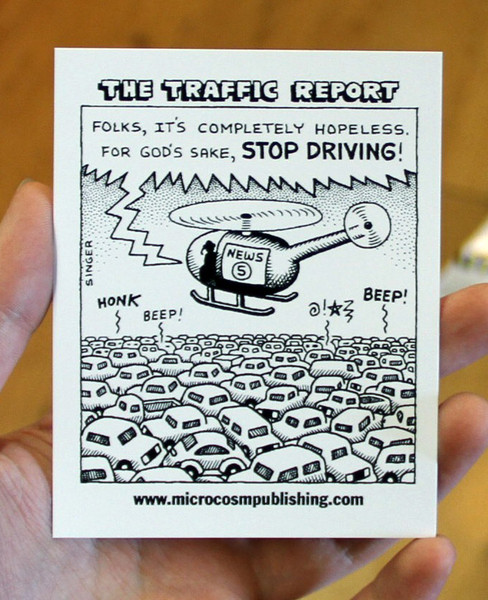 Most people in the US still see bicycles as a sport or something kids do. Do you have a lot of awkward conversations about what your work is actually about?
Not really. Most of my friends and family appreciate where I’m coming from. They’ve been around me and see how I live or have ridden bicycles in urban areas and appreciate what that experience is like. Also, everyone in America has driven somewhere and understands what driving is like. Because many of my cartoons are true to that experience, even most car-drivers will acknowledge the reality of what I draw. Now days, city planners, elected officials and many people in the general public are hip to these issues and trying to figure out how to make their cities less car-dependent or reduce the amount of driving in their lives. Since 2008, for the first time in American history, Vehicle Miles Traveled (the measure of how much we drive) has actually gone down slightly, despite an increase in the country’s population. So people are trying to drive less.
Your work covers a lot of big issues like sprawl, climate change, transportation policy, pollution, economics… What can ordinary people with busy lives and not a lot of political access do to address this stuff?
You can try to address it in your own life. You can try to set up your life so you have to drive as little as possible. In so doing, you vote with your feet and your wallet. When more people bike, walk and use public transit, there is greater pressure on elected officials and government agencies to improve these modes of transportation. It thus increases the profitability of public transit and makes cities more desirable places to live. It also helps reduce your carbon footprint and reduces the amount of money going to automobile manufacturers, oil companies and highway agencies.
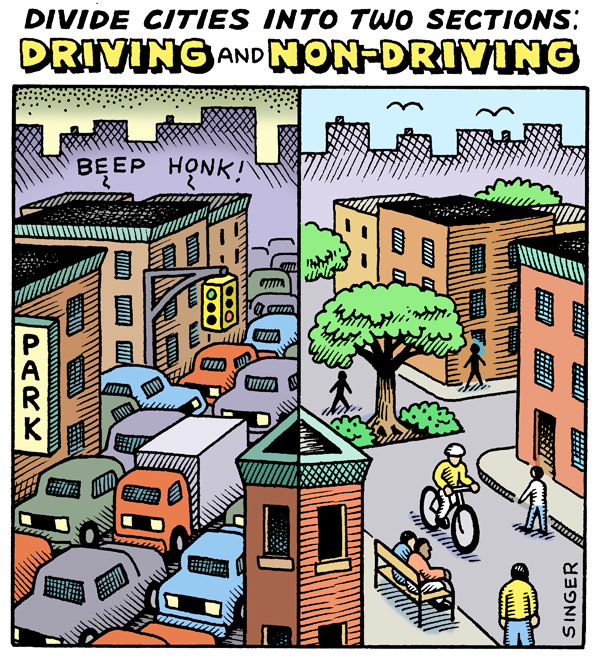 In a globally connected capitalist world, cities and countries are competing for highly skilled labor—programmers, engineers, scientists, etc. To some degree, these people can live anywhere they want. So San Francisco or my current city in Minnesota aren’t just competing with other U.S. cities but are competing with cities in Europe for the best and brightest talent. Polls and statistics show that more and more skilled people want to live in cities that are walkable, bikeable and have good public transit. Also our population is aging and realizing that they don’t want to be trapped in automobile-oriented retirement communities in Florida or the southwest USA. They also want improved walkability and transit. Finally, there’s been an explosion of obesity in the USA with resulting increases in healthcare costs. Many factors contribute to this but increased amounts of driving and a lack of daily exercise are major factors. City, state and business leaders in the US are increasingly aware of all this. It is part of Gil Peñalosa’s “8-80” message (the former parks commissioner of Bogotá, Colombia) and many other leaders.
So how you live your life has an impact on the larger world. Driving less also frees up more of your time to do other things, like participate in the political process at both a local and national level—in school boards, city councils, planning commissions or even political campaigns. If you don’t have to spend two hours a day driving to work or driving your kids to school, you might have time to help organize a “safe-routes-to-schools” program in your school or get walkability or bikeability improvements to your neighborhood.
One thing you realize from trying to reorient your life and get around using your own human power is that no one is going to help us or save us but us. It’s a do-it-yourself world. If we want to prevent environmental destruction, live better lives, get campaign finance reform, peace or justice, it’s up to us to organize and take action. We are the government and we are the world.
This has been an interview with Andy Singer, author of Why We Drive. It is one of a series of interviews with Microcosm authors. The last interview was with Lisa Wilde, author of Yo, Miss. The next one is with Crate Digger author Bob Suren.
 Last month, we felt lucky and stoked to publish
 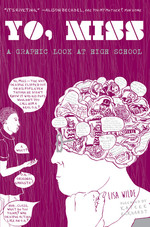 Reading Yo Miss, it was easy to get attached to a lot of the students. Can you share any “where are they now”s with us?
 My quest to interview all the Microcosm workers about their work and lives and favorite things has finally reached our warehouse manager, Jeff Hayes, who has been here longer than just about anyone else. Instead of a picture of himself, he chose to submit a photo of his recording studio. For an even better picture of the soul of Jeff, check out his staff picks
 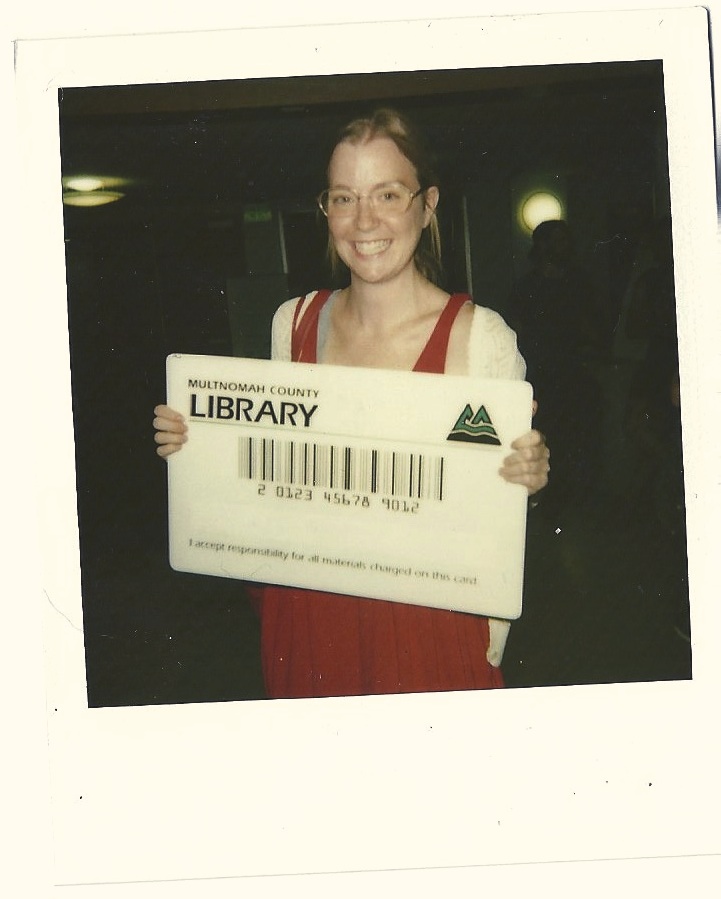 Long ago, Joe handed me a book and said “you’ll like this.” It was Katie Haegele’s
 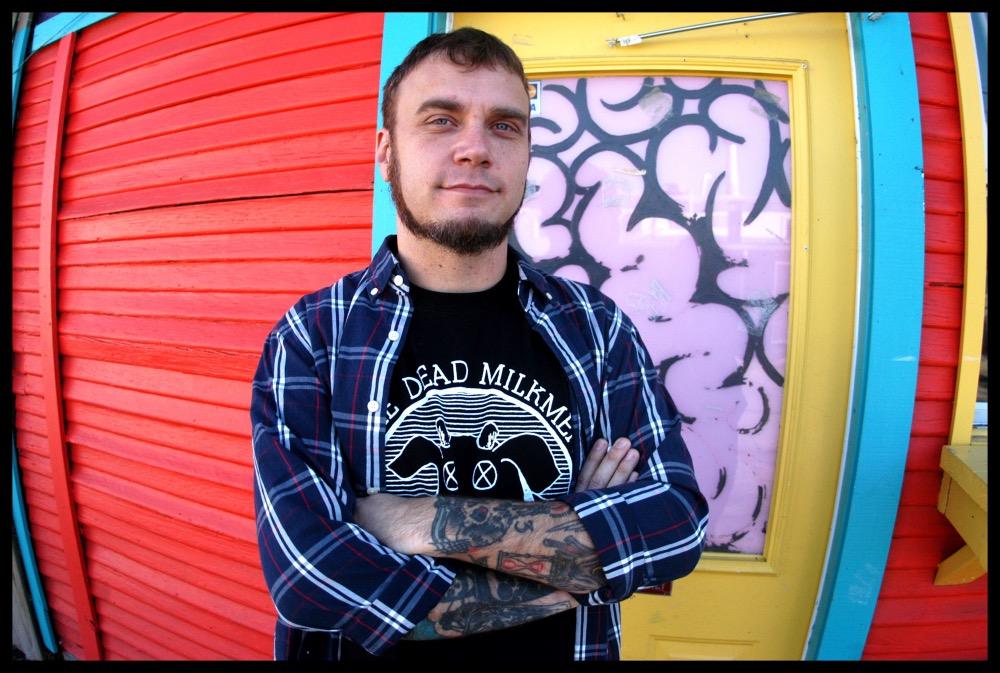 I’ve read my way through most of the Microcosm catalog, but there are some books that just never jumped out at me—most of them being either graphic novels or books about punk music, two genres that I’ve yet to get a handle on. But when I spent a week at home sick, trying to rest and relax, I decided to delve into the books on our list that I had deemed to be the least suited for my interests—Ben White’s
  Your drawing style has evolved a lot since you started in 2001, and of course your life has changed, but even more than those things, the tone of the way you talk about yourself and your life is much different. How have your motivations for making the comic changed, and also do you get something different out of it now than you used to?
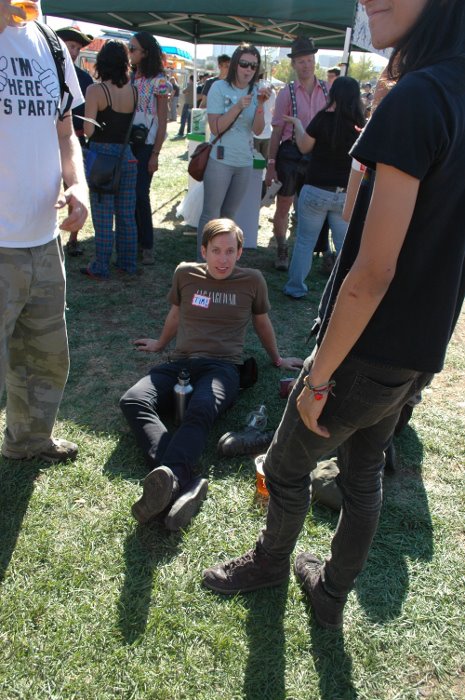 In my quest to introduce our workers to the world, I sent some prying questions this week to Tim Wheeler, who’s been running Microcosm’s publicity operation since 2012, when he worked from a tiny desk atop a lofted platform atop ten teetering feet of stacked boxes of books. Now you can find him behind a comparatively spacious desk upstairs in our new office, barricaded behind stacks of advance copies of books that haven’t come out yet. Read here for more about Tim in his own words—and you can also scope his taste in his staff picks
 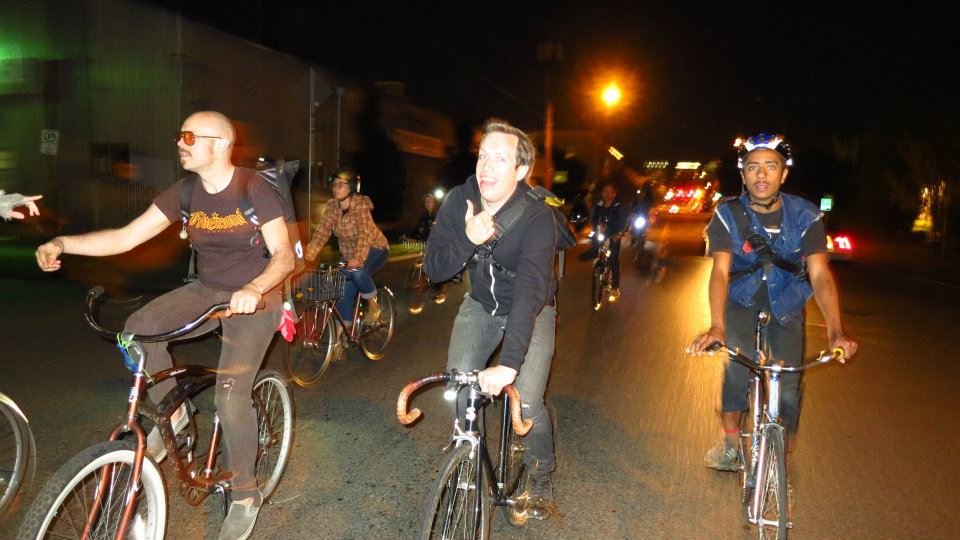 a) Place in Portland: I feel like I need to split this into two categories, since Portland is a pretty great city surrounded by a lot of amazing nature. My favorite outdoor space is the myriad of hidden beaches, rocky outcroppings, and tree lined spots along the Willamette and Columbia rivers, but my favorite is actually a little outside Portland. Hog Island is south of Portland on a stretch of river dominated mostly (and unfortunately) by private estates with “No Trespassing” signs on their docks, but Hog Island is a small, uninhabited island close to a sheer cliff on the west bank of the river. Accessible only by boat (or in the case of my friends and I, a homemade raft of scrap wood and metal pieces with my bike strapped to the side), it’s really just a football field sized chunk of dirt with some trees and sandy beaches, but it feels like you’re hundreds of miles from civilization while floating in the calm stretch of water next to it. As far as indoor spaces, Saraveza happens to be my neighborhood bar, one of the best beer bars in the country (which I’m very much a fan of), and full of some really damn friendly people. It’s the perfect spot to hang out for a bit on a rainy day.
 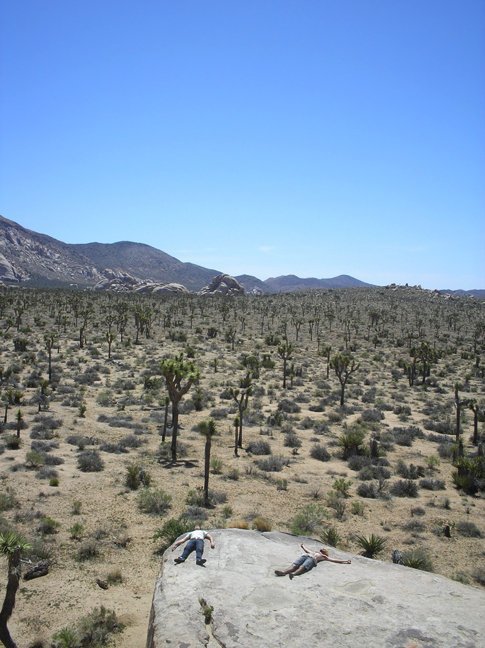 c) Snack food: My favorite foods are of the Mexican variety, but as far as snacks, I can endlessly shovel hummus into my mouth. All I need is a chunk of bread or cucumber or chip or finger.
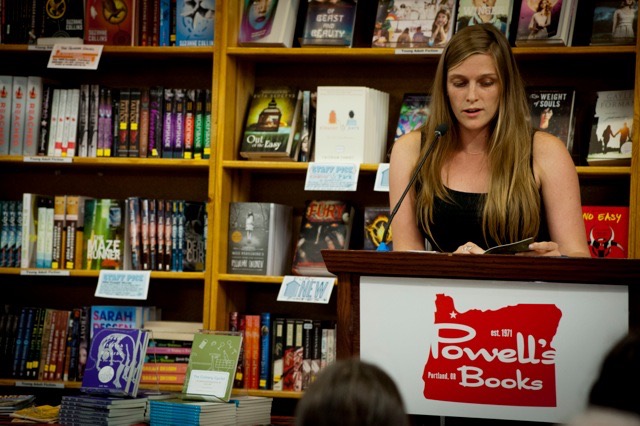 As I’ve been developing our
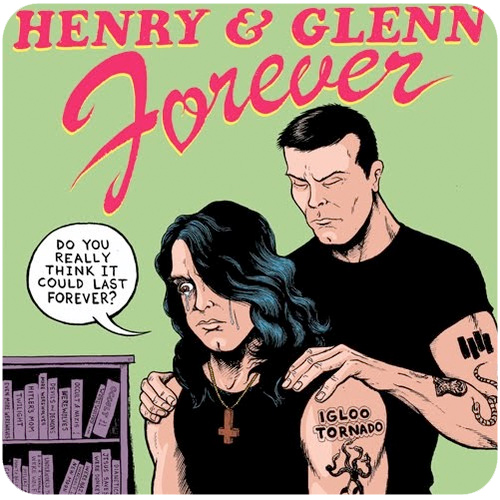
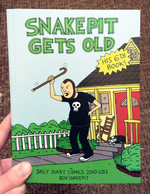
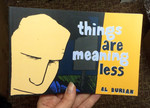
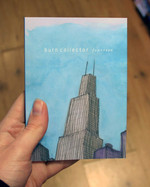
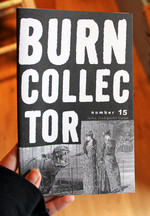
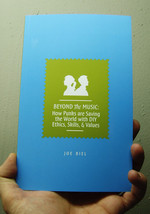
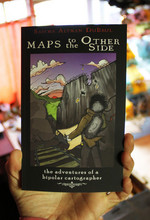
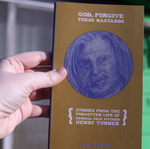

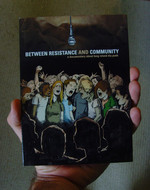
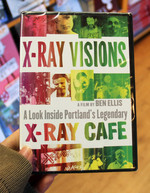
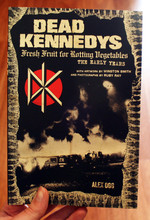
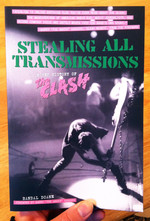

 RMC is going monthly (turns out we’re all too busy producing media to consume enough of it to report on a weekly basis). So: here’s what we took in during the last month+.
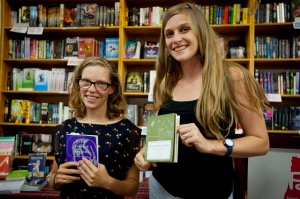 Hello again! This is a series for Microcosm authors (and other curious bystanders) about book marketing and publicity. The