A People’s Guide to Publishing: How U.S. Tariffs Affect Books
Our protagonists, Joe Biel and Elly Blue, swashbuckle their way through how recent threat of additional tariffs will affect the publishing industry
Our protagonists, Joe Biel and Elly Blue, swashbuckle their way through how recent threat of additional tariffs will affect the publishing industry
In the latest in our vlogcast series, publishers Elly Blue and Joe Biel discuss challenges that they’ve overcome with doing their jobs, being organized, and how workflows interconnect
For many years, new publishers and authors have posed questions to us about distribution. They want to know why distribution is so expensive and exclusive. It’s a much more complicated answer than they were expecting so we’re going to break that out in a weekly video series over the next few months.
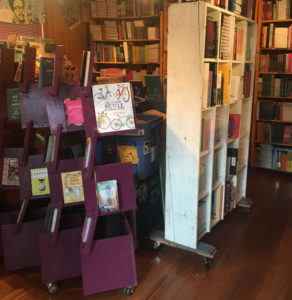 This week, when we made the announcement that we will part ways with our trade distributor at the end of 2018, we also announced that we won’t be seeking a new distribution relationship directly with Amazon. We’ve gotten a lot of virtual high fives for this, and there’s also been some misunderstanding about what exactly this means.
“I feel terrible because I still sell / buy on Amazon,” is one reaction we get. “But won’t your company / authors suffer if your books aren’t available on Amazon?” is the other. The answer is simple, but the background is complex, and this post is meant to help clarify the relationship Amazon has with publishers, authors, and consumers, and will hopefully give you some guidance in making more informed choices. (more…)
 Recently we were approached about starting a new thing on a new platform that was all very top-secret, and we jumped at the chance (we like shiny things). That platform is Drip, Kickstarter’s new subscriptions program, and our project launched today in its inaugural class of creators.
We’ll still be using Kickstarter to fund the production of some of our individual books. Meanwhile, Drip is a little different: it’s about monthly support—it’s similar to Patreon, which we also use. It offers various levels of support; you can get ebooks or credit for our online store. By backing at our core level, you can have access to regular posts with advice about all aspects of our publishing work. You can ask us anything and we’ll do our best to talk you through it. And we’ll share regular windows into the life of our office.
Some posts we have planned for the near future include:
We’ve been doing this a long time, and we love sharing our books with you. Now, let us share our knowledge and lore, too.
Thank you for your support!
This is the ninth post in our ongoing Business of Publishing series by Joe Biel, the author of A People’s Guide to Publishing. This edition tackles an important but more advanced question, “how much can I afford to spend on the book that I am publishing?”
While, on the surface, any answer to a question like this seems to be built from a steady diet of bullshit, books are remarkably consistent. Unlike cookies or soft drinks, most books are not branded. A book from a major house sits next to your book and others from indie presses. If you’ve successfully developed your book, you are providing each reader with enough information to make a choice based on their own experiences, observations, and tastes.
Let’s begin! For those following along at home, I’ve created this spreadsheet that you can download or duplicate and edit. And as you’ll see, there are fairly predictable formulas for everything.
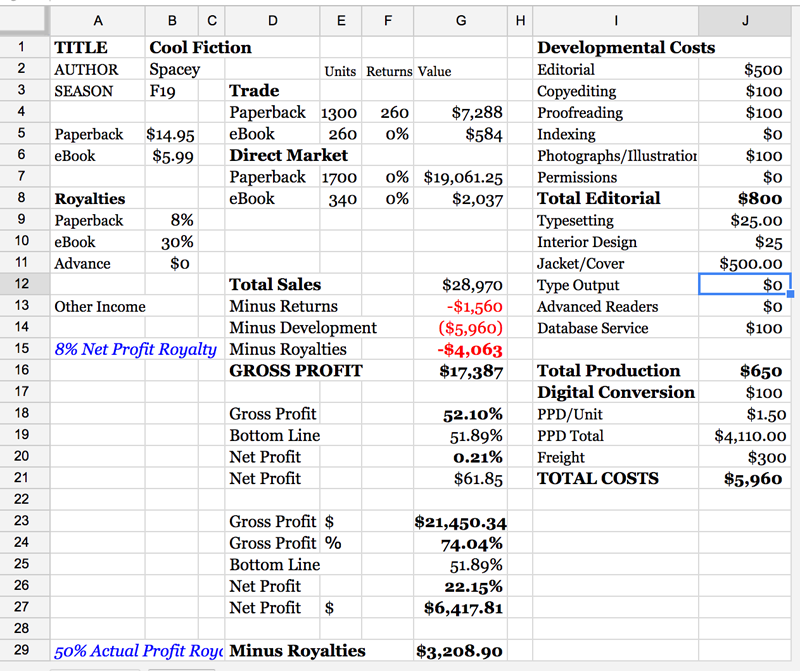
The upper left hand corner begins with the title, author, and book’s release season. Lines 5 and 6 include retail prices for each format. If you’re doing a hardcover, you’d include that as well. Lines 9 and 10 list the author’s royalty by format as well as any advance payment that they receive. Traditionally this advance is your projected first two years of royalties paid in advance.
Line 13 is income from selling film or translation rights or foreign territory rights but it’s best not to plan for this in advance since even commitments can fall apart as the licensee changes their plans.
Beginning in column D, lines 4-5 predict what will likely be the sales in bookstores as well as returns and revenues. These numbers are based on your comparable titles and their selling habits. It’s best to be conservative here so that your expectations are reasonable and you aren’t shocked when you see your actual sales and returns.
Lines 7-8 predict similar sales in the direct market, which would include sales at your own events, via your own website, to non-trade stores that buy non-returnable, and books sold to the author. Again, these numbers should be conservative and based on figures in reality that you are seeing elsewhere.
Scooting over to column I, we’re looking at the publisher’s expenses for putting the book together from editorial to production to licensing to eBook conversion to paper, printing, and binding costs. Fiddle with these numbers to see what you can afford for a project before committing with an author.
Next, back on column D and lines 12-16, we’re looking at sales minus returns minus development costs minus author royalties. This will tell you what your gross profit is.
Next, we subtract operating costs (“the bottom line”), like rent, staff, telephones, envelopes, warehousing, etc. These should comprise every expense that you’ll have to pay for even if you don’t work on a book during a given month. Subtracting your gross profit from your bottom line will tell you how much actual profit the publisher is earning from each book. In this example, it’s less than $62. This example represents the most statistically likely outcome for a book like this. Publishing is about volume so to make up for these low returns, you can either produce tons and tons of books (called a “paper mill” in the industry”) or land a few heavy hitters every year. Your choice, kind of.
Another vital part of the P&L is to evaluate a year or two later how well the book did against expectations. If a book does not sell as well as expected, it’s important to figure out why. Was tons of new competition added? Did interest in the subject fade away? Was it revealed that the author’s cure for cancer was actually bogus and their credibility tanked? Was there a major developmental error in the cover/title/subtitle that confused readers about what the book offered or how it was unique? Answer these questions. Similarly, if a book did better than expected, it’s similarly important to figure out why and repeat these events with other titles.
Alternately, to demonstrate how these traditional contracts still benefit the author, I showed an alternate royalty model where the author takes 50% of the profit. But as you can see, comparing cell G29 to G15, 8% of the cover price ends up being more than 50% of gross profit in most cases until you really land a bestseller.
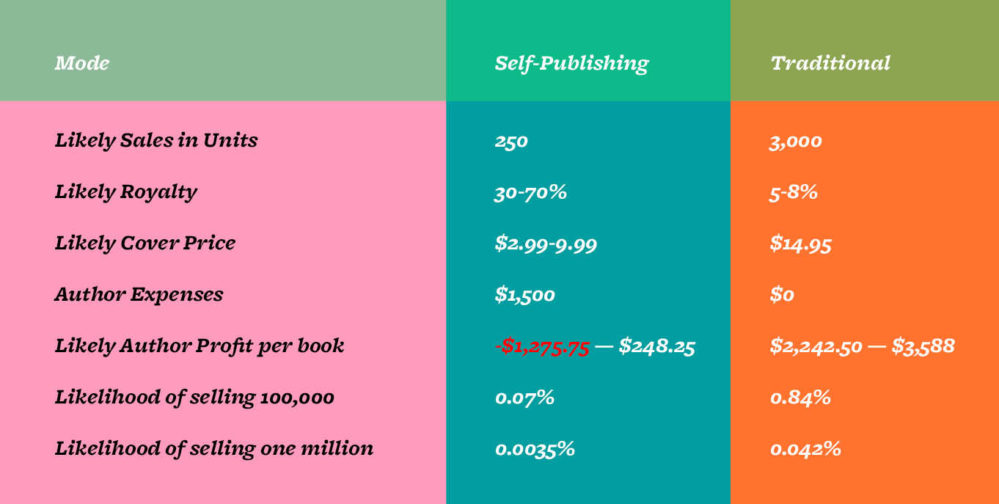
Due to Amazon’s immense marketing budget and campaign to convince authors that publishers are greedy and obsolete, many authors don’t understand why the traditional 4-8% paperback royalty is still much more in their favor than self-publishing on Kindle and CreateSpace so I’ve made a chart for that too.
 We’ve been lucky enough to have a few designs in our catalog so popular that they get rampantly bootlegged. The most-stolen designs also happen to be our most popular, including Microcosm’s logo, the chainring heart, as well as Joe Biel’s iconic bicycle designs Put the Fun Between Your Legs and, the most popular of them all, Evolution.
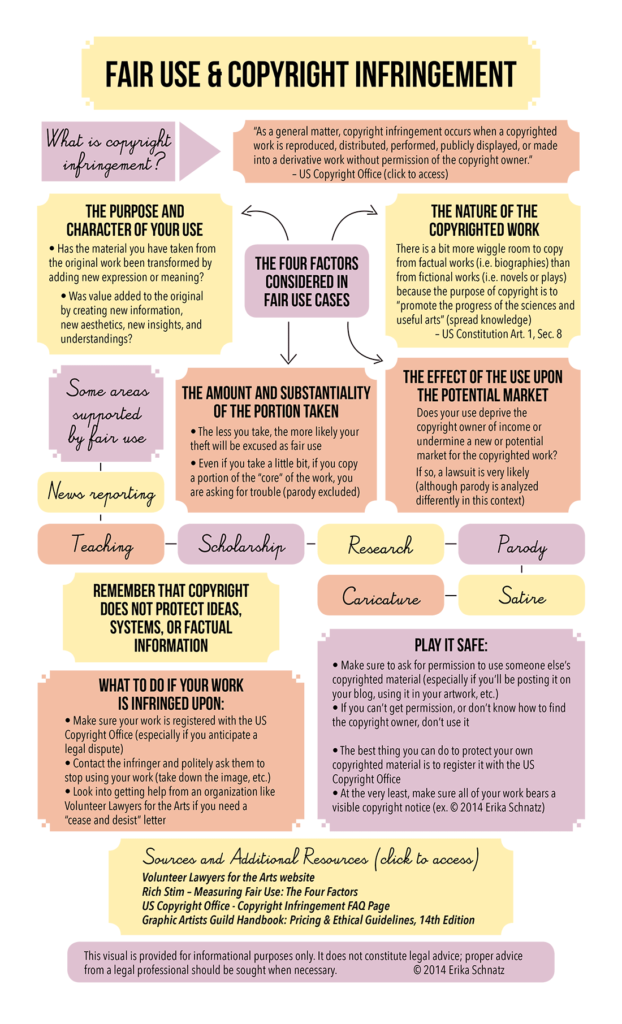
When someone uses these images without our permission, they don’t always realize that they’re stealing. In reality, it’s pretty much the same thing as if they came into our store and walked out with a bunch of books without paying. We spend a lot of time laying it out for folks, and so we were stoked to find Portland designer Erika Schnatz‘s infographics about the topic. She’s created the clearest visual explanation we’ve ever seen of how you know what you can use and when, and how to register your own copyrights.
Erika kindly gave us permission to post her explanation of fair use (which answers the question: “Is it ok to use this thing I didn’t design?”) here. See it below! You can also download an interactive pdf and see her other copyright flow charts as well as her diverse other design work (and hire her!) at right here at her website.
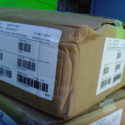
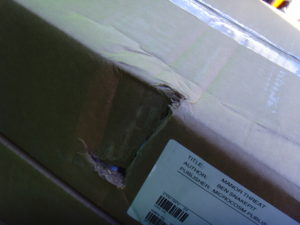
When the truck arrived Monday to drop off Manor Threat, the much-anticipated new Snake Pit book, we were excited. New books set off a whole chain of reactions around the office, from smelling them and flipping through the pages and checking the spines and the colors to sending them off to reviewers and customers who’ve pre-ordered them, to updating various spreadsheets and things on our website and social media. This book was running four days late, so we were all extra ready, and people were already starting to walk into the store wanting to buy it.
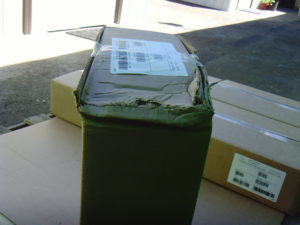
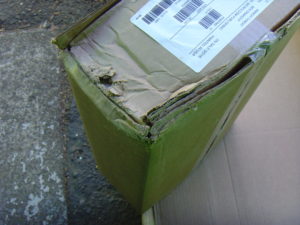
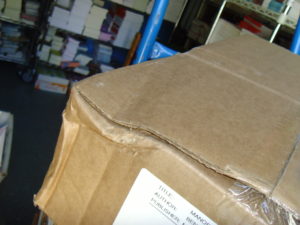
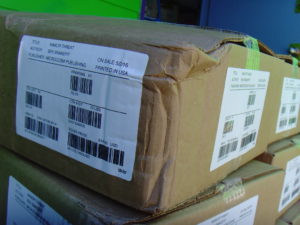
So imagine the general dismay when Nathan opened up the pallet and found a bunch of the boxes looking like, well, see below. You can imagine that the freshly-printed books inside are not exactly in mint condition, either.
The truck had already driven away. But it was immediately clear what had happened during those four extra days of transit: The pallet had been dropped on its side, possibly from a height, and then strategically repacked with the damaged boxes on the inside of the stack, where they couldn’t be seen without unwrapping and unloading the whole thing. Very canny!
At any rate, there’s your snapshot of a day in the life of book publishing. It’s not all power lunches and polishing sentence structures to a high sheen… in fact, very little of it is. Most of our work honestly consists of dealing with stuff like this. The dreaded dropped-and-repacked pallet scenario has certainly happened before and will likely happen again. The worst part was holding the book an extra few days while we documented the damage and negotiated with the freight company. It throws a wrench in everyone’s work flow.
The good news? Most of the books weren’t damaged, and our shipping team is in the process of getting everyone’s pre-orders out the door this weekend. And the book… if we do say so ourselves, it came out looking really great. If you want your copy asap, you can snag it right here.
Thanks for joining us on this journey through the wonderful world of publishing!
One of the best parts of working in publishing is that there is always something new to learn. Where do we learn it? From books, of course.
Here’s a list of some of the books that have been most helpful to Microcosm workers recently, and that we recommend to you, aspiring publisher / editor / writer / designer / production manager / roller-arounder-in-books. We added a couple in that we published, too.
This is just the tip of the iceberg, of course. We’d love to hear your recommendations!
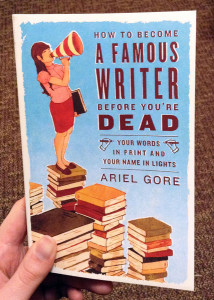 How to Become a Famous Writer Before You’re Dead by Ariel Gore
This book rules. If you want to write or publish books, read this first. Ariel Gore shows you how to write, publish, and promote what matters to you, and how to build a readership from the ground up. If you want to get into writing or publishing is a get-rich-quick scheme, there are other books about that; this one shows you how to do it because you have a vision to make something meaningful. Full of golden advice from someone who’s done it—and is still doing it—successfully.
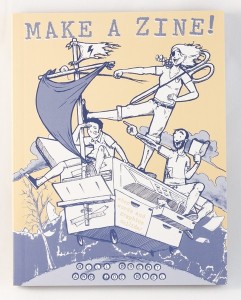 Make a Zine by Joe Biel and Bill Brent
We always recommend that would-be publishers start small—make something yourself that you passionately believe in, learn the trade, and start building a network and a movement before you get mixed up with Amazon, trade distributors or doing any kind of business at scale. This book contains a wealth of information for publishing a zine, comic, or book yourself, with real knowledge about everything from acquisitions to production to marketing.
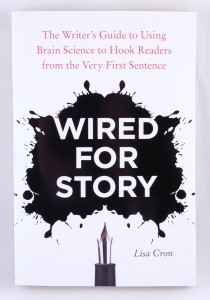 Wired for Story by Lisa Cron
One of our authors recommended this book, and we in turn recommend it to you! The sad truth is that it doesn’t matter how good your writing is if you can’t captivate readers’ attention on every page. Lisa Cron shows you the neuroscience of story, and it’s invaluable. This book is great for writers, editors, and anyone doing title development, aka the publisher.
On Writing Well by William Zinsser
Learning how to tell a compelling story is essential for getting anyone to read that story… actually writing it well is still important for other reasons. William Zinsser is one of the best guides as you learn that part of your craft, as a writer or editor.
The Forest for the Trees by Betsy Lerner
This is the best book we’ve found about what it’s *like* to be an editor. Which is almost as important, if not more important, than the nuts and bolts of learning how to edit. Betsy Lerner has worked in a number of different New York publishing houses and shares stories and knowledge and her valuable experience. If you are an editor, work with one, or want to be one, you’ll glean a lot from reading this.
Understanding Comics by Scott McCloud
If you plan to have anything to do with visual storytelling—comics, picture books, art books, whatever—this guide (in comics form, of course) is very helpful for understanding how to visually tell a story.
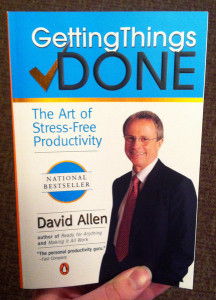 Getting Things Done by David Allen
People go into publishing because they love books; the reality is that you spend a lot of time with data, spreadsheets, contracts, budgets, production schedules, inventory, software, email, and a gazillion little tasks, each of which is vitally important and intricately relies on many other things being done right. It can all get to be overwhelming, especially if you’re a one-person publishing shop. GTD is the gold standard for organizing your complicated life without succumbing to stress or losing sight of the big picture.
Beyond Dealmaking by Melanie Billings-Yun
Another thing most people learn after launching their publishing career rather than before is that much of the job is about negotiating—contracts, relationships, deliveries, solutions, whatever. There isn’t a lot of abundance in the industry, and people are often in it for very different reasons and with very different expectations. This is hands-down the best book on negotiation that we’ve found, and will teach you real and practical skills for building lasting, sustainable relationships beyond just closing the deal.
Publishing for Profit by Thomas Woll
This book is dense and tough to read. The slog is worth it if you’re serious about publishing as a business, and if you need that business to make money. The best time to read this book is when you have already been doing the work, have some books under your belt, and are starting to wonder if you’re ready for trade distribution and/or to hire a second person.
 Our Band Could be Your Life by Michael Azerrad
Wait, what? This is a history of underground and punk music in the 80s and 90s, not a publishing manual! Actually… this is also very much a book about how to launch a scrappy, ragtag business all the way to the moon, be you a drunk and angry drummer touring in a filthy van or a teenager in your bedroom with a big dream and a cassette duplicator. Microcosm is built on similar foundations, guided much more by the DIY music industry than the book publishing world, and this book can profitably be read as a fascinating case study of businesses run—some more successfully than others—entirely without traditional resources like capital or training, but with no shortage of values, creativity, and pure energy and rage.
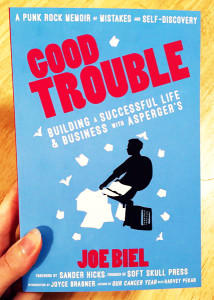 Good Trouble by Joe Biel
Microcosm founder and publisher Joe Biel’s memoir can be read through several lenses, and one of them is small press business manual. The company’s often bumpy, sometimes glorious, always edifying history can be found in these pages, along with background on some of the stuff that makes the gears turn—contracts, management, strategy, accounting, proofreading, and more. And if we do say so ourselves, it’s also an excellent example of reader-oriented development, which is what any memoir published today needs beyond all other qualities.
And don’t forget you can read our Business of Publishing blog series right now, without waiting for our store to open or your book to come in the mail.
Meet Joe! Joe is Microcosm’s founder, first employee, and author of our next release, Good Trouble: Building a Successful Life and Business with Autism. I haven’t interviewed Joe previously for this series because, well, for one thing Joe is super busy filling out forms and putting out fires. And for another thing, Joe is the boss, and it doesn’t seem entirely serious to ask your boss what their favorite snacks are. But then I figured that if we are too serious to talk about snacks, then we should probably take ourselves less seriously. And there’s a new book to tell you about. So, here it is, a bunch of questions for Joe!
1. You wrote this amazing book, Good Trouble, that tells your story and the story of Microcosm. Working with you, I’ve learned that you’re cautious about accepting memoirs. What’s the difference between a memoir worth publishing and one that isn’t, and how does your book suit the bill? Why did you decide to write the book?
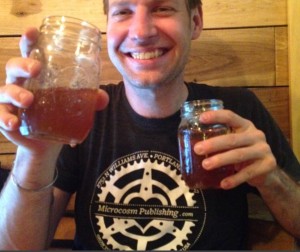 Thank you. I would like to believe that I’m cautious about everything but most of the rest of the staff would probably disagree. In prehistoric times, a memoir was simply a story. If we’re using marketing terms, a memoir could simply be a nonfiction novel. But a novel has a narrative, characters, plot, a theme, and an arc. Many writers don’t engage the reader as a stakeholder in their writing and many of the memoirs that are submitted to us are expected to be published on the grounds that they have been written. For a memoir to work, it needs to have all of those components and have a clear concept of what it is, who it is for, and how it is different from the pack. My book is for would-be publishers, adult autistics, Microcosm fans, and people who want to start businesses. There needs to be at least 5,000 of these people out there and we need to know how to reach them. I am too close to the work to tell you if mine succeeds but thankfully everyone who I have heard from so far has enjoyed it immensely so I am thankful that I have good editors and that I put so many hours into it.
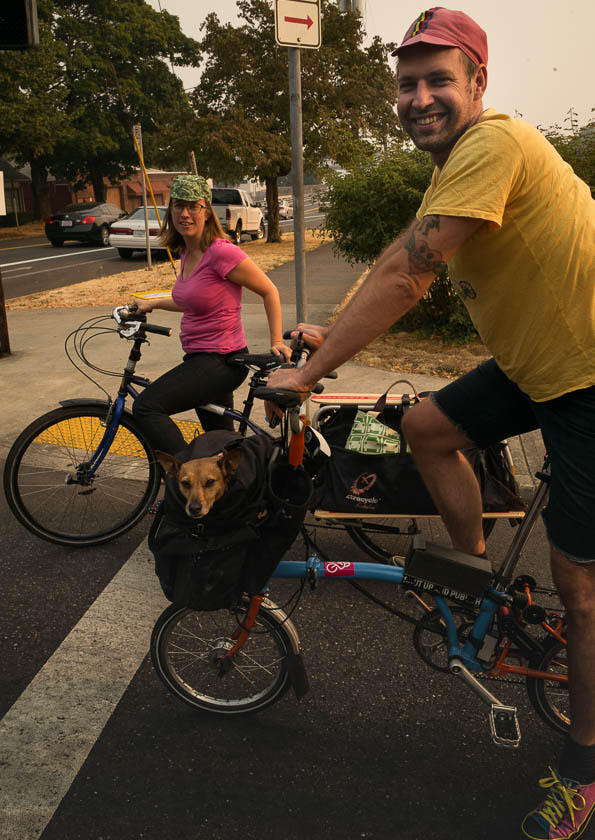 I started working on this book about six years ago before I knew how the story would end. I had just been diagnosed as autistic but I didn’t yet know what was next in the narrative. I actually thought that this book would make more sense with a more traditional publishing house but the staff at Microcosm pushed me to do it for our 20th anniversary and my economic sense got the best of me, since I would earn more publishing it with Microcosm and I wouldn’t suffer the fate of my last book where it was picked up by multiple publishers before they either dropped it or went out of business. I’m really proud of the results and I think that mostly speaks to the presence and clarity I’ve developed around events in my own life largely as a result of writing the book.
2. In your book, you come out to the whole world as having been diagnosed with autism as an adult. What’s it like to come out with this and tell the world? Were you nervous? How have people responded so far?
I kept my diagnosis a secret for six years because I had been bullied so badly both as a child and as I began to attempt to privately come out to people after my diagnosis. Those experiences gave me a very different way of seeing the communities that I had been involved closely with for almost my entire life—as a whole they did not want to embrace the analytical skills necessary to understand what my diagnosis meant and how that it had affected my ability to perceive situations across my whole life. Autism is traumatic because you are constantly in a social dynamic where you are accidentally offending and upsetting people and you don’t understand why. Obviously, the biggest solution is the cognitive training to mimic the social skills and empathy of neurotypicals but that would have been much smoother if the punk or zine scenes had been willing to incorporate my ability into understanding the situation. Ironically, people that I have told outside of progressive left scenes have generally been really supportive and understanding and it has lead to great conversations and finding autistics. Telling my story publicly has been really important because people no longer will deny my experience in the way that they have been when I tried and come out to them one on one.
3. Please share some favorites: Your favorite snacks, favorite hobby, favorite place in Portland, favorite place not in Portland, favorite Microcosm book, favorite non-Microcosm book.
 My favorite snacks are Beanitos and various fruits.
My favorite hobbies are to 1) sort my pills and 2) have a relatively scheduled but somewhat free hour or two to drop into places that I don’t get to see often enough. You can perhaps surmise why I am so reclusive.
I love the Avalon Wunderland in Portland because it’s stuck in time as the whole city is changing and the dysfunctional aspects of the place take decades to work out. Other favorite places are Extreme Noise in Minneapolis and Muddy Waters in San Francisco. They both tie to important times in my life and again their unchanging nature is refreshing in 2016.
I had to think long and hard about this but I think my favorite Microcosm book is Firebrands—the reason is complex. It’s mostly because I didn’t do any of the work on the book so I got to enjoy it as a reader first and foremost. I love that you can open to any page and be brought to joy and tears. It’s very much an emotional rollercoaster and completely inspires me to this day. The stories in it told me that there is so much more life to be lived when I felt like I had been everywhere and done everything.
I think my favorite non-Microcosm book is Jon Ronson’s Them because it encapsulates what I think my life would look like if my upbringing had been more supportive and privileged: doing on-site humorous reporting about fringe weird shit all over the globe without handing the punchlines to the reader.
4. Are you ready for the next 20 years? What’s the plan? When you think about celebrating 40 years, what do you see?
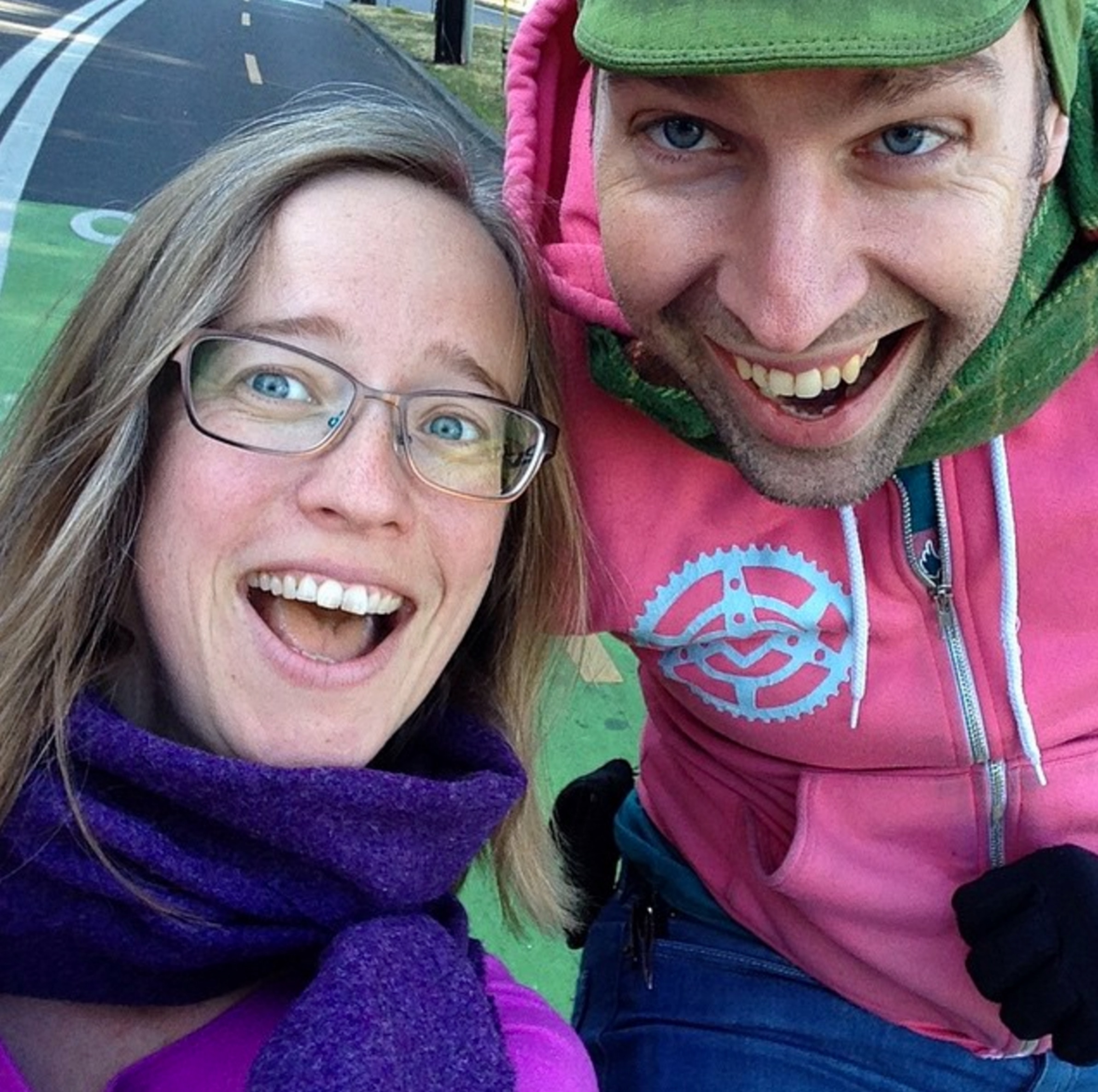 As I wrote on the Powell’s blog story, I feel like it is now the era of the small press. That is partly because we are much more in touch with what our readers actually want from us and also partially because we are able to adapt much more easily and quickly. I really enjoy how the publishing industry has changed and that’s where I differ from most of my peers. I feel like it gave me a new game to learn and become proficient at. Title development will become increasingly important and thus increasingly refined at Microcosm. Data will inform our best practices.
Microcosm spent several years trying to find a mentor, a business that was larger than us but still independent without being owned by investment bankers. We found only one company that fit this bill, which is disheartening. But for me this is a better reason to succeed on our own terms and these are the kinds of things that motivate me. I would guess that our backlist will more than double in the next 20 years and we’ll have produced about 2,000 original books by our 40th.
One important area where we are changing is no longer relying on one book each year to be a fly-away bestseller. Instead, we are much more comfortable expecting each book selling 3,000-5,000 copies and if one does better than that, we know how to handle it but we aren’t reliant upon it like we were in 2009.
I now organize our cash flow a year in advance and budget that far ahead as well. It prevents a lot of stress and hair loss.
Anything else I should ask?
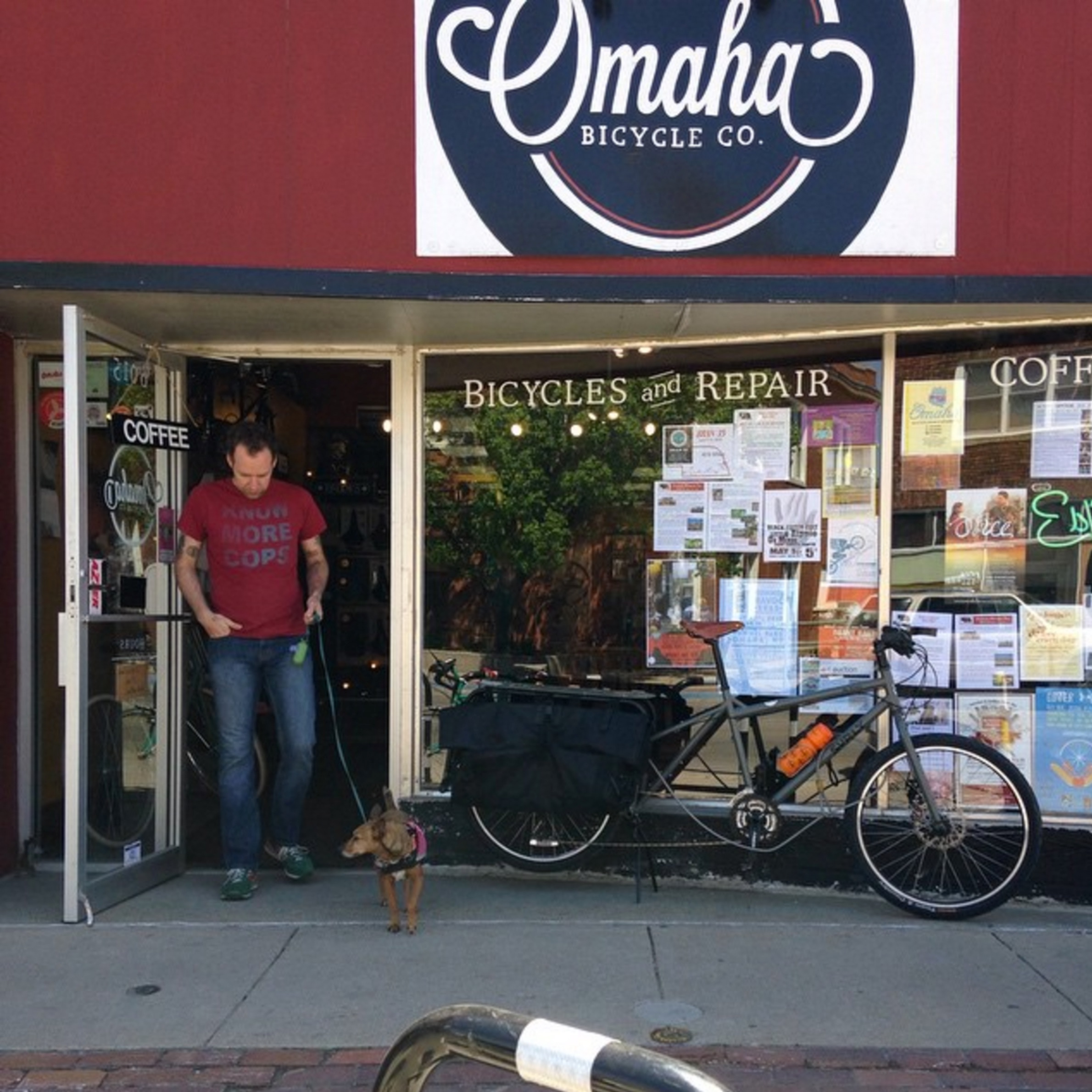 Before my diagnosis, I suspect that I’ve been hard to work with over the first fourteen years. A lot of people have done a lot of work around here and I don’t feel they get acknowledged enough. Nate Beaty has been programming our databases and website since 2002 and created a lot of our data-driven systems. He is probably the only reason that Microcosm was organized enough to exist past 2007. But more importantly, we were able to work together on creating tools that allowed individuals to make informed decisions without having to pull out giant file stacks and dig out records. Nate has created enough that Microcosm staff can be informed every day about what best practices are.
It’s been really neat to see autistics come out of the woodwork and how many old Microcosm fans reappear for the anniversary. They all have really great stories and, Buddy Hershey, the oldest customer that I know of who still orders, sent me a really sweet gift for the occasion. Because I am autistic, my life has mostly been solitary and as much as I have picked up social skills in the last decade I mostly think back to the times that I was alone as the happiest so it’s nice to create a new narrative where I can be happy and around other people at the same time.
This has been an interview with Microcosm founder Joe Biel. Read more in Joe’s new book, Good Trouble.