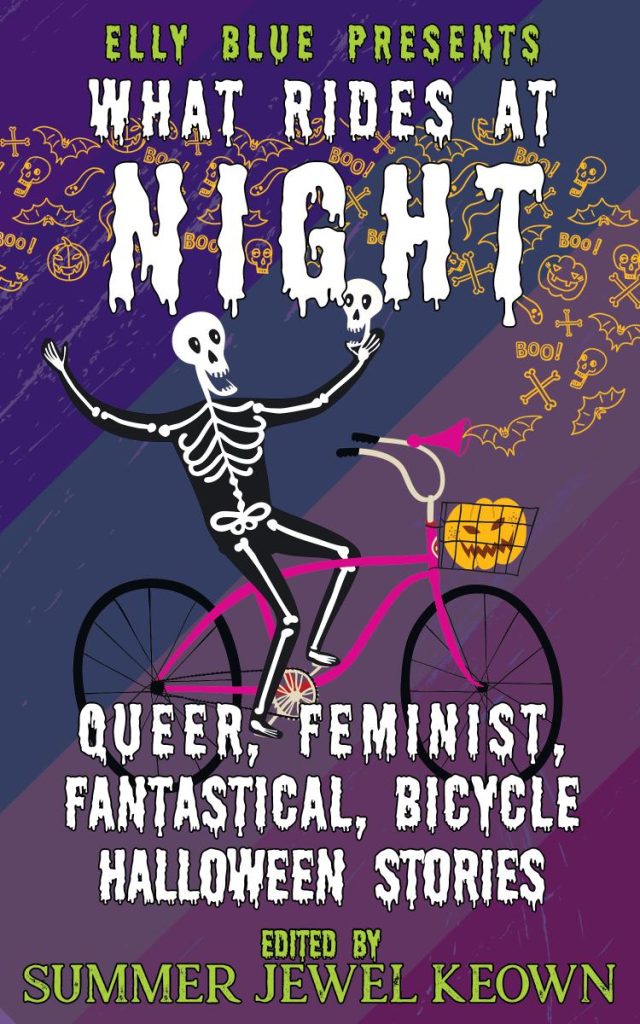
When the veil thins, the bicycle revolution rises—along with thirteen new, original, spooky stories for the thirteenth volume in the series!
Gather ‘round, ghoulfriends, and peer into this enchanting collection of ghost stories, tall tales, and feminist fictions simmering with cyclist power. This monster mashup of thirteen queer and quirky stories grants us a glimpse into the world beyond this one, where community, creativity, and bike culture reign—a world where DIY zombies start a monster zine collective to fight their oppression by “normals,” time moves backwards as bones are covered again with flesh, cryptids defend fellow outcasts from bullying, and teen crushes take an otherwordly (though not unwelcome!) turn. Whether shared with your feminist book club, passed around the Halloween house show, or read alone on a dark and stormy night, each story is a spell, reanimating the land of the living with more fun, imagination, and bike rides.
Read on for a sneak peek at What Rides at Nightedited by Summer Jewel Keown and series editor Elly Blue, available for preorder from our site or your local bookseller, heading to a shelf near you!
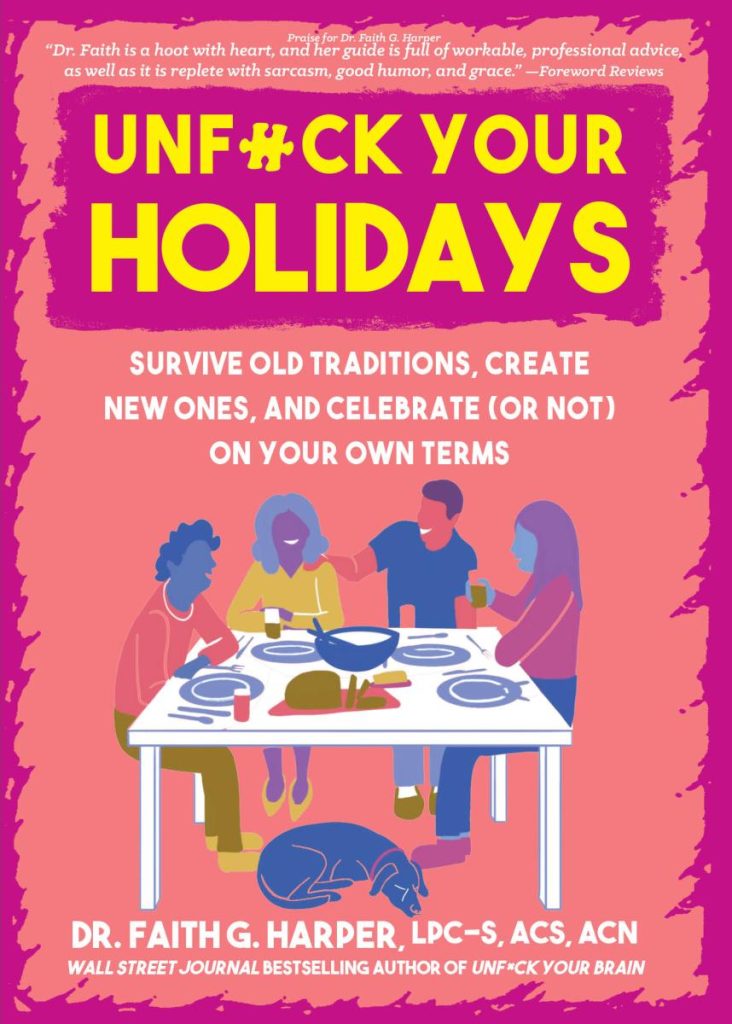
Holidays can be magical—and they can also suck so hard. Need to make a plan for Christmas, Halloween, Thanksgiving, Valentine’s Day, or other holidays? Trying to figure out how (or if) to observe a birthday or difficult anniversary? This holiday survival guide from Dr. Faith G. Harper, bestselling author of Unfuck Your Brain and Unfuck Your Boundaries, is for anyone who’s ever struggled with the expense, drama, loneliness, pressure, and feelings that go along with so many of those big days on the calendar.
Learn coping, logistical, and conversational strategies for making it through a family holiday dinner without bloodshed. Figure out how to go your own way next year (and how to have that conversation). Gain skills and recipes for hosting your friends or chosen family. Navigate religious, political, and dietary differences. Whatever you celebrate (or would prefer not to), this funny, level-headed, helpful book offers perspective and tools for making all holidays more meaningful and less stressful.
Read an exclusive excerpt of Dr. Faith’s latest, Unfuck Your Holidays, shipping now from our site or available in stores October 7, 2025:
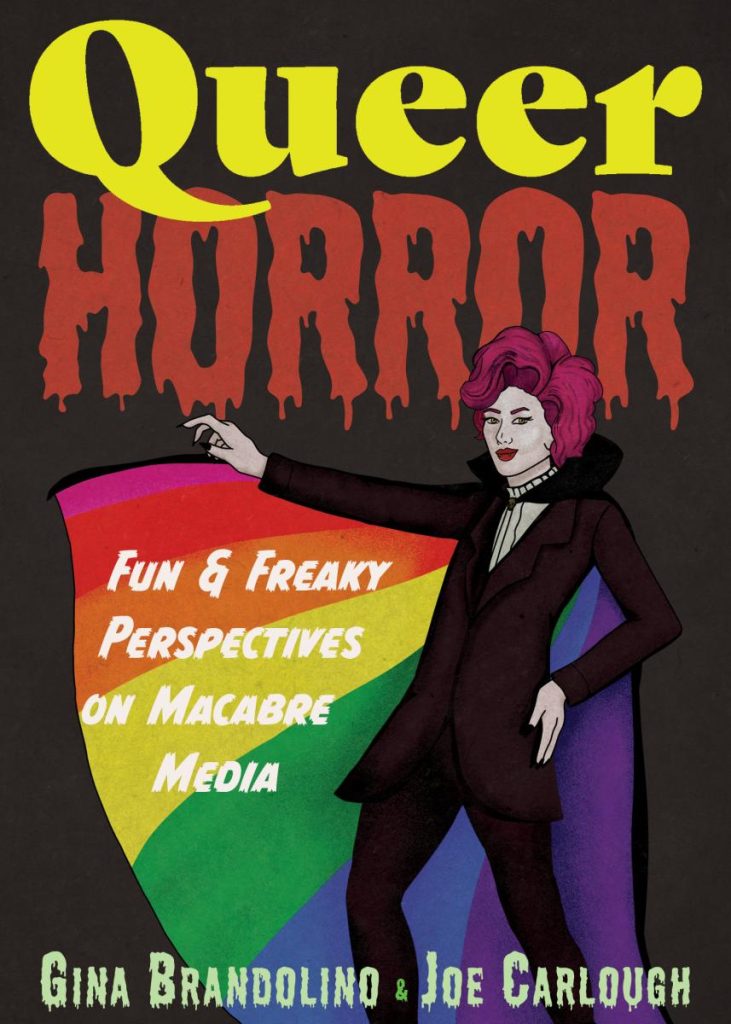
Don’t be scared straight! Curl up on the couch with Joe and Gina for a romp through their favorite horror movies, TV shows, and books from the 1930s to today, exploring their messages, meaning, and enduring appeal for queer audiences. From The Thing to vampire porn, The Exorcist to paranormal television, Goblin Market to Dr. Jekyll and Mr. Hyde, these thoughtful, conversational essays will make you think, laugh, shiver, and see your favorite media in a new light (even if you have to cover your eyes for the scary parts).
Horror buffs and queer media mavens alike will enjoy this wide ranging journey through a genre often derided, dismissed, and misunderstood, but which offers rich opportunities to explore our culture’s ideas about gender, sexuality, and desire. Whether you relate to the monster or the final girl, enjoy sleuthing hidden queer themes, or just want recommendations for obscure, low-budget ghost movies, this book’ll be a scream.
Iron and stained glass, brick and stone, clouds and rain—Pittsburgh is arguably America’s most gothic city. Permeated with an old-world sensibility, this once perennially dark and smoggy metropolis that built its wealth through coke and steel is moody, atmospheric, melancholic, and beautiful.
Eschewing contemporary stereotypes that reduce the city to football or sandwiches with fries on them, The Pittsburgh Tarot expresses the complicated and conflicted period of the city’s greatest expansion and influence during the 19th century. This is the same era that inspired the iconic Rider-Waite-Smith Tarot illustrations, and each of the cards in this deck pays homage to those original designs. The Major Arcana features significant historical figures, while the Minor Arcana is divided into suits of Neighborhoods, Rivers, Nature, and Industry.
The Pittsburgh Tarot features people, events, and themes from the 19th century and through La Belle Epoque, with a special focus on the Gilded Age, the city’s period of greatest significance. With an aesthetic style that calls to mind the work of artist Edward Gorey, this is a beautiful and unique expression of a city that’s as much sentiment and disposition as it is location.
The new edition of this trailblazing classic includes 11 new interviews and over 30 new profiles of even more incredible musicians, including Blondie, Neko Case, The Urge, Gang of Four, Pogues, Submission Hold, Fastbacks, Teen Idols, and many more.
In this far-reaching anthology, David Ensminger delves underground to explore the oft-overlooked community of badass women who shaped the punk scene. There is a common thread of women being excluded and gatekept from hardcore music; this book shows that women have been able to overcome those barriers, kick ass, and shred with the best of them. Biographies, interviews, band anecdotes, and never-before-published photos showcase the talent and artistry of bands like Bikini Kill, the Guttersluts, Bratmobile, Spitboy, the Germs, the Slits, and dozens more. With its intimate aesthetic analysis and raw, zine-like presentation, this is an essential resource for anyone looking to discover, rediscover, and cherish punk history.
Find good cries, good laughs, and good meals all in the brand-new paperback edition of this Microcosm classic by beloved illustrator Automne Zingg and vegan chef extraordinaire Joshua Ploeg
Mr. Cave finds healthy ways to feed and soothe his sorrows in these pages, featuring cool Cave-based illustrations and rockin’ vegan recipes from mashed potatoes to tofu dogs. Whomst among us doesn’t need to passionately tell a slice of pizza to “get inside of me” from time to time?
For plant-based snackers, rock music weirdos, Red Hand Files followers, or anyone with a sense of humor and a more-than-usual number of feelings, this comfort food cookbook lets us all shed a few tears and self-soothe with food together.
Navigate death and grieving with greater openness, honesty, and preparation thanks to the supportive expertise of Singapore’s leading “life celebrant.” Growing up with a hardworking undertaker father known as the Coffin King, death was the family business for Angjolie Mei—but that didn’t make it any easier to understand, or grief any easier to feel.
When her father died unexpectedly, leaving debts but no end of life instructions, Mei found herself taking up his funeral director business, not only to provide for her family, but to help others see death as an opportunity for dignity and celebration. “A funeral,” she writes, “is life’s graduation ceremony,” and we should honor it and plan for it accordingly.
This post is part of a series by the team at WorkingLit. WorkingLit is cloud-based software developed by Microcosm Publishing that gives independent publishers tools to thrive and grow at their own pace. Our industry is run by billionaires and conglomerates, and we want to give our fellow publishers the freedom to market and sell your books, understand your business, and painlessly pay royalties. Learn more at WorkingLit.com.
For the unprepared, every small shift in the publishing industry can feel like a disaster on the horizon. But it doesn’t have to be this way if you have your tools at the ready. Even before the current unprecedented times (™), there was an influx of seasonal disaster fearmongering from all areas: the whole west coast looks forward to The Big One and wildfires that grow year after year; the northern Midwest has to batten down the hatches for yearly snowstorms that shut down business for days. I grew up on the Gulf Coast, where weather predictions regularly forecast a potential Cat 5 hurricane that might decimate coastal cities.
I’m deeply uninterested in fearmongering, and if I were, I wouldn’t be on the administrative side of the independent book world ;). The thing is, the disaster is already here, I’ve seen it (many of us have), and getting anxious about a future era of climate dystopia is kinda useless. Y’all saw, or lived, last year’s horrific hurricane that swept away entire areas of southern Appalachia and the East Coast, or the terrible fires that reached Los Angeles and burned down entire neighborhoods. The Gulf lives in the shadow of Katrina and a number of other hurricanes that did irreparable damage to the landscape and population. Heck, my home city has fatal flash-floods multiple times a year that come and go without much comment.
Something I’ve learned (and this is where the prepper stuff comes in) is: the time to prepare is now. Don’t get scared, get ready! That might sound a little desperate or fatalist but I don’t necessarily mean it like that. Yes, I have met the rural Texans with a large store of firearms, but there are also my beloved queer anarchist friends who preserve food every winter, raise their own animals in the middle of their southern cities, know how to fix their own houses when high winds blow the roof off, and build decentralized, anti-surveillance communication networks. What I mean is, think about what you would potentially lose in the face of a crisis and figure out a sustainable practice to keep what you need. Learn to grow, find, and can your food. As these pals have shown me, teach yourself survival skills outside of the system and see if, instead of feeling paranoid, you just feel like your life has become less fretful and more expansive.
Anyway. Now transmute that ethos into other realms. How do you build a life practice that supports you no matter the eventuality? After all, I’m trying to get at a holistic view of existing in the world that invests in climate safety practices alongside all other kinds of safety and nourishment. So of course, coming as I am from a WorkingLit point of view, I’m starting with books.
First, let’s agree that there’s no one impending disaster in the book/publishing industry. Disaster, industry-shifting changes, and outside forces have come and gone in multiple forms, each shift shaping the industry and unfortunately ridding the world of some amazing publishers as it goes. Whether industry-specific, like the rise of eBooks and Print on Demand (see the prescient and thoughtful A People’s Guide to Publishing podcast episode) or U.S. economy-specific, like tariffs (see…another prescient and thoughtful A People’s Guide to Publishing podcast episode, lol) and Amazon’s relentless pursuit of money at the expense of publishers and bookstores, shifts are wide-ranging.
The same outlets that forecast the disappearance of New Orleans due to rising waters are also persistently forecasting the disappearance of print books, or bookstores. But come on, y’all, the binary deserves to be complicated, there’s no Black and White, we already know this. There is no “existence” vs. “complete disappearance.” We can forecast that, reasonably, such shifts will continue to occur, just as I can unfortunately assume that another hurricane is going to hit my home city and, in advance, make sure my family has flood insurance, a stock of potable water, and a generator.
I guess from what I can see, preparing for disaster breaks down to a few major things:
Know what you’ve got on hand. Keep track of your stock. Life is a mystery, your assets don’t have to be. Publishers: Make your systems as infallible as possible. If you’re hand-counting stock in a garage to keep track of your catalog, please please stop. If you’ve not taken inventory in a while, please build it into your schedule at least twice a year. Track your product movement so you’re not scrambling to reprint or find space for bestsellers.
Recognize your network. If you’re just the “firearms” type of prepper, this is your nuclear family, I guess; if you’re the “queer anarchist” type of prepper, this is your family too, but maybe not so much in the bound-by-blood type of way. And if you’re a publisher, this is not just your audience of readers but your community of peers. You need them and they need you! Keep track of the actual stats year over year, don’t just make assumptions based on your loudest customers. You’ll find out a lot more about your highest-selling accounts, the wild online-only stores that try to return 60% of their orders from you, and the small but determined gift accounts that love what you do. If you’re sure of what you have, you’re sure of where it’s going, and you’re sure of who’s doing it with you, then you can…
Prepare for the future and any eventuality. Remember when I said “getting anxious is kinda useless”? Ok, we’re back to that again. Knowing where your weak/strong spots are means that, as time passes and the world changes, you know where your business could use growth and will need support. At all costs, stay the flexible, creative, generative person I know you are if you’re reading this. With the stable support of data behind you, you can focus your brain on that critical thinking and spend less time wondering when you accumulated 1000 extra copies of an underseller… Pile these three together and they lead to the hopefully inevitable outcome that you can:
Feel like you’ve got the control to do what you WANT. One of my friends referenced disaster preparedness including a “go-bag” and knowledge of evacuation routes. I’m from the south, baby! We don’t have evacuation routes, we hunker down and keep our “bunkers” above ground-level. But you do you. You know your apocalypse best; preparedness is not a one-size-fits-all process. In the publishing world… I’m sure you can see where I’m going with this. If you’ve followed steps 1-3 above, you know your context, your catalog, your pals, and your requirements to move forward. You can pivot depending on each year’s needs. In Microcosm’s case, this means owning the software to track sales proactively, thereby weathering recessions with relative ease and sticking around for decades to sell more great books.
Lift up yourself and your community. In the Gulf Coast case: make sure you know the person on your block with a boat (it might be you).
As a book industry worker outside the coastal hubs, I spend a lot of time, mostly digitally, with fellow book people talking about our geographic challenges. There’s something incredibly loving and thoughtful about what I have seen: a growing group of book people who can share their gripes about working in South Carolina, Idaho, Tennessee, Texas, New Mexico, Missouri, etc., but also share support systems and brainstorm solutions together. Non-New York presses were some of the first to pivot when Covid started in 2020, and I think it’s because we’re so used to existing outside the spotlight, and (already limited) funding, of the literary world. Decentralization is not a gimmick, it’s vital that we retain independence and also support our fellow indies. Rising tide and all that.
May we all survive and live to tweet (or whatever the next inevitable post-apocalyptic social media is, as the samsara of app churn continues) another day.
Sara Balabanlilar has spent almost ten years working in the book world, including bookselling, event organizing, design, marketing, sales, and indie publishing. She is currently the Marketing Manager at WorkingLit and a Senior Sales Specialist at Microcosm Publishing.
Do you have a passion that you want to obsess about in a love letter to the world? In this new edition of Microcosm’s popular DIY guide to zine-making, Joe Biel updates the information provided in the first edition (edited by Biel and the late and great Bill Brent) to address zine making in today’s digital and social-media-obsessed world, featuring a new foreword by St. Louis zinester and literacy worker Ymani Wince.
Covering all the bases for beginners, Make a Zine! hits on more advanced topics like Creative Commons licenses, legality, and sustainability. Says Feminist Review, “Make a Zine! is an inspiring, easy, and digestible read for anyone, whether you’re already immersed in a cut-and-paste world, a graphic designer with a penchant for radical thought, or a newbie trying to find the best way to make yourself and your ideas known.” Illustrated by an army of notable and soon-to-be-notable artists and cartoonists, Make a Zine! also takes a look at the burgeoning indie comix scene, with a solid and comprehensive chapter by punk illustrator Fly (Slug and Lettuce, Peops). Part history lesson, part how-to guide, Make a Zine! is a call to arms, an ecstatic, positive rally cry in the face of TV book clubs and bestsellers by celebrity chefs. As says Biel in the book’s intro, “Let’s go!”
When you listen and scream along to your favorite punk or hardcore band, does that help your mental health or reinforce your frustrations? Artist Reid Chancellor leads us on a tour through hardcore musicians that have struggled with mental health and written about it in their songs, from Gorilla Biscuits to Youth of Today and beyond.
Picking up on threads that first appeared in Hardcore Anxiety, this new, engaging graphic narrative will be deeply relatable to anyone who has ever grappled with identity, fear, and loss in the mosh pit. Chancellor props open the door towards seeking mental health support with humor and vulnerability, asking the question, “Why aren’t there more hardcore songs about seeing your therapist?” That’s a song we all might need to hear.